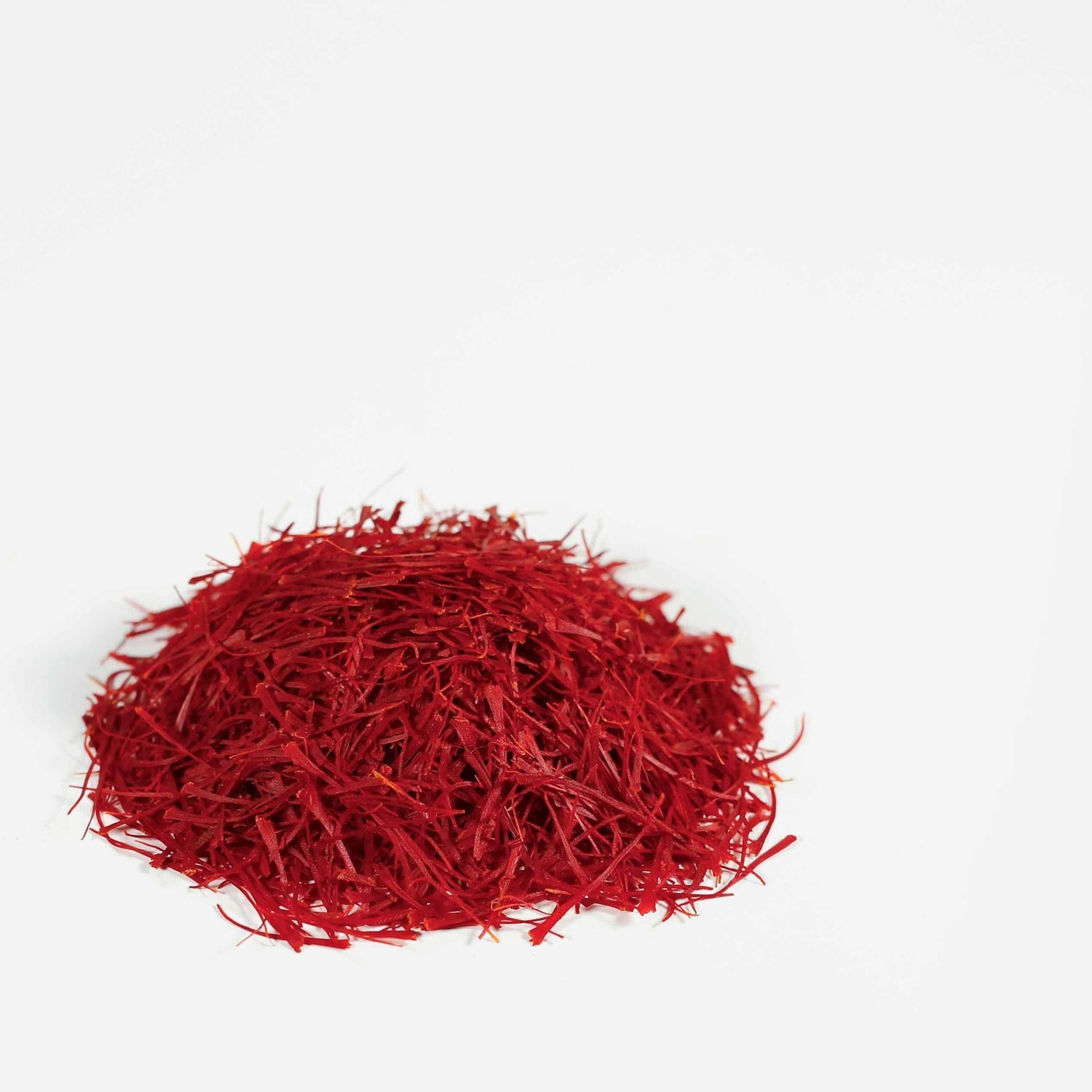

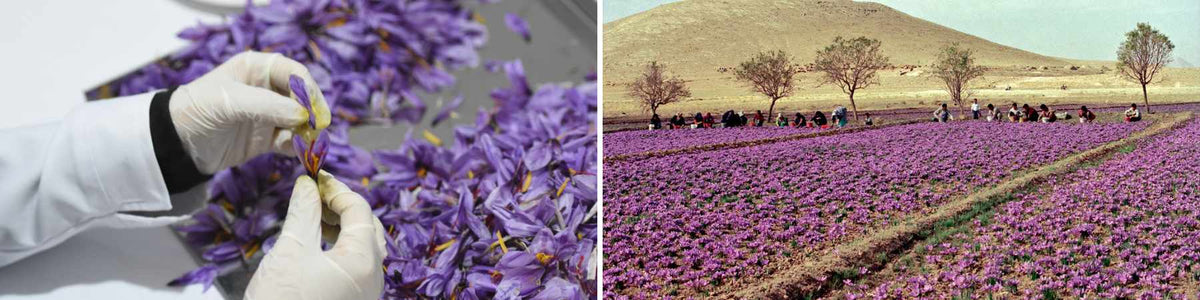
Iran remains the world's dominant saffron-producing country, but moving goods from Iran into international markets has become increasingly complicated.
Recent U.S. sanctions have expanded beyond individual businesses into parts of Iran's aviation, rail and financial infrastructure. Saffron itself was not specifically named in the September and October 2026 measures discussed below, but international trade depends on far more than the product being shipped.
Airlines, freight companies, banks, insurers, customs agents and other intermediaries all form part of the journey between producer and buyer.
As sanctions exposure and compliance concerns increase, some of those organisations may restrict or avoid transactions connected with Iran altogether.
The result is an important distinction:
A product does not need to be specifically targeted by sanctions for moving it through the international supply chain to become considerably more difficult.
What Has Changed Around Iran's Transport Network?
On 8 September 2026, the U.S. Department of the Treasury announced sanctions against 36 targets connected with Iran's aviation sector, including 27 Iranian airlines.
The measures also targeted intermediaries and networks that U.S. authorities said were involved in supporting Iran's aviation industry. U.S. Department of the Treasury
The practical effects soon extended beyond the companies named by the U.S.
Later in September, Reuters reported widespread suspensions of Iranian airline services across neighbouring countries, including the United Arab Emirates, Oman, Georgia, Azerbaijan and Iraq. The UAE is particularly significant because of its role as a major regional aviation and trading hub. Reuters
Then, on 1 October, the U.S. Treasury announced further sanctions affecting Iran's rail, automotive, manufacturing and metals sectors.
The rail measures included the state-owned Islamic Republic of Iran Railway Company, Raja Passenger Trains Company and the Railway Transportation Company, a significant private freight operator. U.S. Department of the Treasury
Together, these developments have increased the complexity surrounding Iran's transport infrastructure.
What Does Aviation Have to Do With Saffron?
Quite a lot.
Saffron is unusual compared with many agricultural commodities because it is:
- extremely lightweight
- high in value
- relatively easy to transport by air
- normally shipped in comparatively small commercial quantities
- sensitive enough that long, complicated supply chains are undesirable
A shipment of saffron does not require the container-scale logistics used for grain, fruit or bulk agricultural products.
Air freight can therefore be particularly useful for moving saffron between countries.
But an international air shipment still depends on airlines and freight companies being willing to accept the cargo, route and associated documentation.
When access to Iranian airlines becomes restricted and international carriers become more cautious about Iran-related transactions, the number of practical transport options can narrow.
That does not mean every Iranian agricultural shipment has stopped.
It does mean that the infrastructure available to exporters can become considerably more complicated.
Why Can an Airline Refuse a Shipment That Is Not Specifically Banned?

International carriers make their own decisions about what freight they will accept.
Those decisions can involve far more than whether the physical product itself appears on a sanctions list.
A carrier or freight company may consider:
Who is sending the goods?
Who is receiving them?
Which banks are involved?
Which airport or airline handles the shipment?
Which freight agents participate?
Does the route involve a sanctioned entity?
Could the transaction create sanctions or regulatory exposure?
Companies may also decide that the cost of performing additional compliance checks is not commercially worthwhile for a particular shipment.
This broader behaviour is sometimes referred to as de-risking.
Rather than trying to determine whether every individual transaction is permissible, a company may decide to avoid certain countries, counterparties or transaction types altogether.
That can make ordinary commercial trade difficult even where the goods themselves have not been specifically targeted.
The Financial System Matters Too
Transportation is only one part of the problem.
Goods cannot move internationally without payments, banking and financial intermediaries.
On 1 October 2026, the U.S. Treasury also announced action against the A7 Network, which it described as a shadow-banking network used to move funds and evade sanctions.
The action included sanctions against the network and a proposed FinCEN rule concerning transactions involving its sub-agents. U.S. Department of the Treasury
This does not mean an ordinary saffron transaction automatically involves such networks.
The relevance is broader.
As restrictions surrounding financial channels increase, legitimate businesses may encounter fewer banks and payment providers willing to process transactions that have a connection to Iran.
Trade therefore depends on two separate questions:
Can the product physically leave the country?
and
Can the international transaction supporting that shipment be processed?
Both need to work.
Is Iranian Saffron Sanctioned?
The September aviation measures and the 1 October rail and financial measures discussed here do not specifically designate saffron as a sanctioned commodity.
That distinction is important.
A sanction targeting an airline, railway company or financial network is not the same as a blanket prohibition on saffron.
However, whether a particular transaction is permitted can depend on the jurisdictions involved, the parties to the transaction, financial institutions, transport companies and applicable sanctions rules.
So the issue is more complicated than simply asking:
“Is saffron banned?”
A more useful question is:
“Can all of the organisations required to move and pay for the shipment legally and practically participate?”
Increasingly, that can be the more difficult part.
Why Iran Matters to the Global Saffron Market
Iran's role in saffron production makes these developments particularly important.
The Food and Agriculture Organization of the United Nations reported in 2025 that Iran produces more than 90% of the world's saffron. FAOHome
FAO has also described saffron cultivation as deeply connected with rural livelihoods in major producing regions, particularly Khorasan Razavi and South Khorasan. FAOHome
That concentration means that international developments affecting Iran deserve attention from the wider saffron industry.
Saffron can also be grown in countries including Afghanistan, India, Greece, Spain and elsewhere, but Iran's share of worldwide production remains unusually large.
Changes affecting Iranian transport or trade infrastructure therefore have the potential to matter beyond Iran itself.
Could This Cause a Global Saffron Shortage?
There is currently not enough evidence to say that the latest sanctions will create a global saffron shortage.
That would be too strong a conclusion.
International saffron trade can use different exporters, intermediaries, countries and routes, and individual businesses may encounter very different circumstances.
The latest measures also do not establish that:
- worldwide saffron supply will fall
- retail saffron prices will necessarily rise
- Iranian saffron exports will stop
- saffron will become unavailable internationally
Those outcomes would require separate trade and market evidence.
What can be said is that the environment surrounding Iranian international trade has become more complicated.
That alone is worth watching.
A Product Is Only One Part of the Supply Chain
For consumers, it can be easy to imagine international trade as a simple journey:
Farm → exporter → buyer
In reality, even a small shipment may involve:
Grower → processor → exporter → freight forwarder → airline → customs → bank → importer → distributor
A disruption at any one of those points can delay or prevent the shipment.
This matters particularly for saffron because the finished spice is such a high-value product relative to its weight.
The agricultural side of the supply chain may be functioning normally while the transport or financial side becomes the bottleneck.
Why This Matters to Saffron Buyers
None of this means consumers should assume that saffron from Iran is unsafe, unavailable or prohibited.
Those would be very different claims.
Instead, the changing sanctions environment illustrates why origin, traceability and supply chains matter in the international saffron market.
Knowing where saffron comes from is only part of the story.
How it is processed, transported, tested, traded and ultimately reaches the buyer is also important.
For Saffronice, developments like these are worth explaining because they help consumers understand the wider saffron industry without turning every geopolitical development into a prediction of shortages or price increases.
The best approach is to distinguish between confirmed changes in international trade infrastructure and speculation about what those changes might eventually mean for saffron supply.
What Happens Next?
Iran's trading environment is changing quickly.
The September measures targeting aviation were followed within weeks by additional action involving rail and financial networks. At the same time, international airlines and neighbouring countries have changed their handling of Iranian flights. Reuters
That means future developments should be monitored through actual evidence such as:
- saffron export volumes
- freight availability
- airline access
- customs data
- wholesale saffron prices
- changes in destination markets
- new sanctions or exemptions
For now, the clearest conclusion is this:
Saffron itself does not have to be specifically targeted for international trade in the product to become harder. When transport, banking and intermediary networks become more restricted, getting agricultural goods from producer to international market can become a challenge of its own.
Sources
U.S. Department of the Treasury — 8 September 2026
Treasury Grounds Iranian Airlines with Sweeping Sanctions Action. View Treasury announcement
U.S. Department of the Treasury — 1 October 2026
Operation Economic Outcast Targets Iran's Remaining Industrial Lifelines. View Treasury announcement
U.S. Department of the Treasury — 1 October 2026
Action Against the A7 Network. View Treasury announcement
Food and Agriculture Organization — 16 September 2025
FAO report on Iran's role in global saffron production. View FAO source