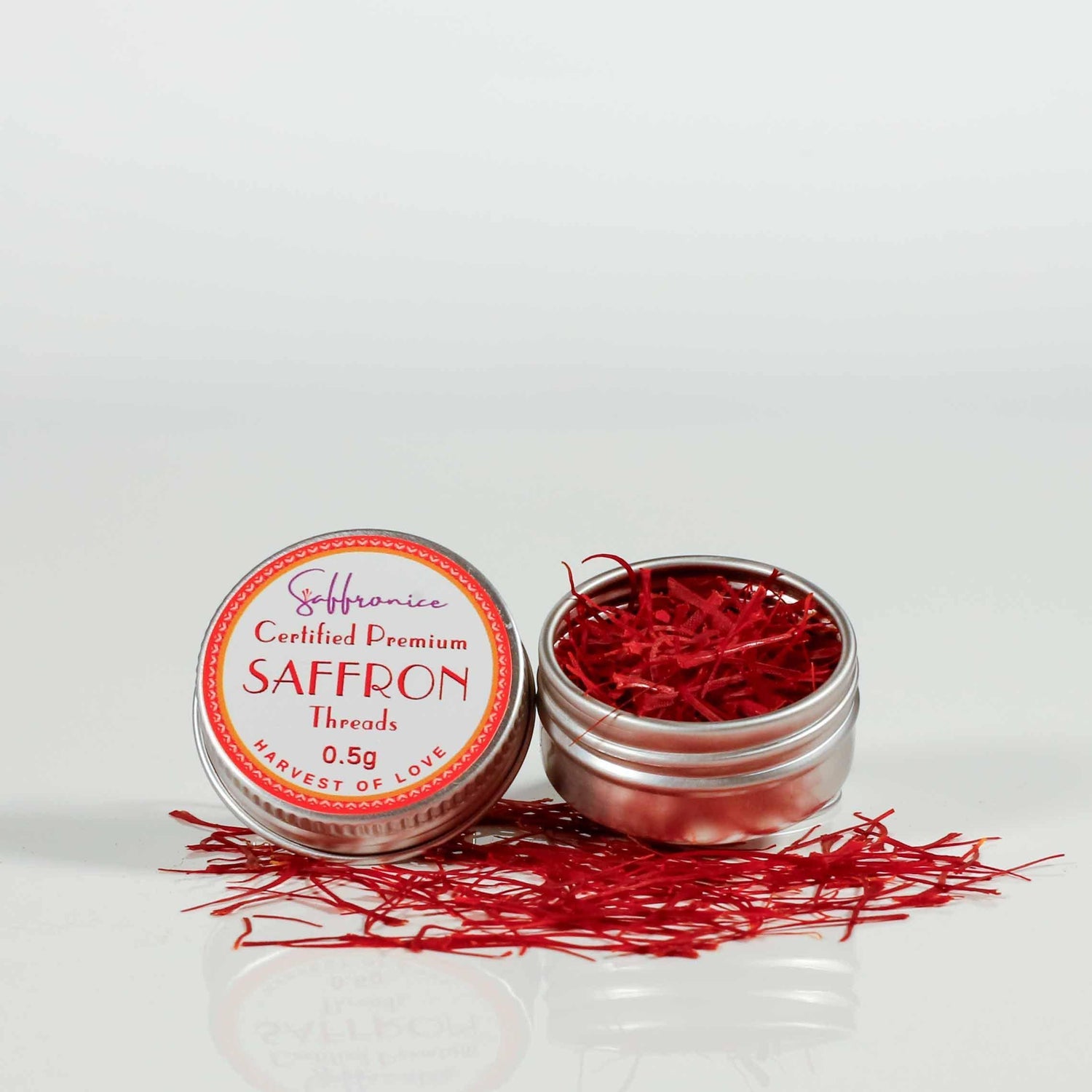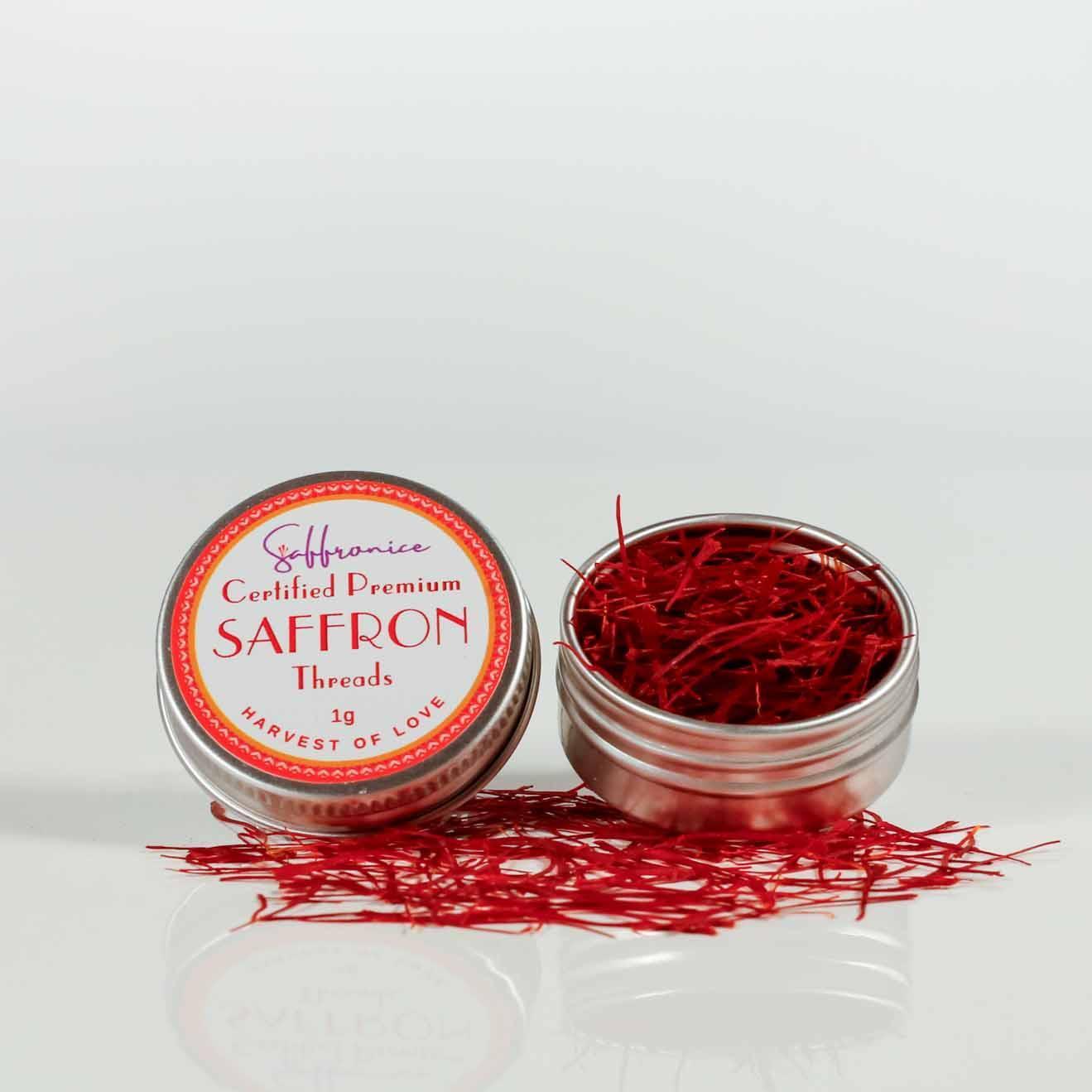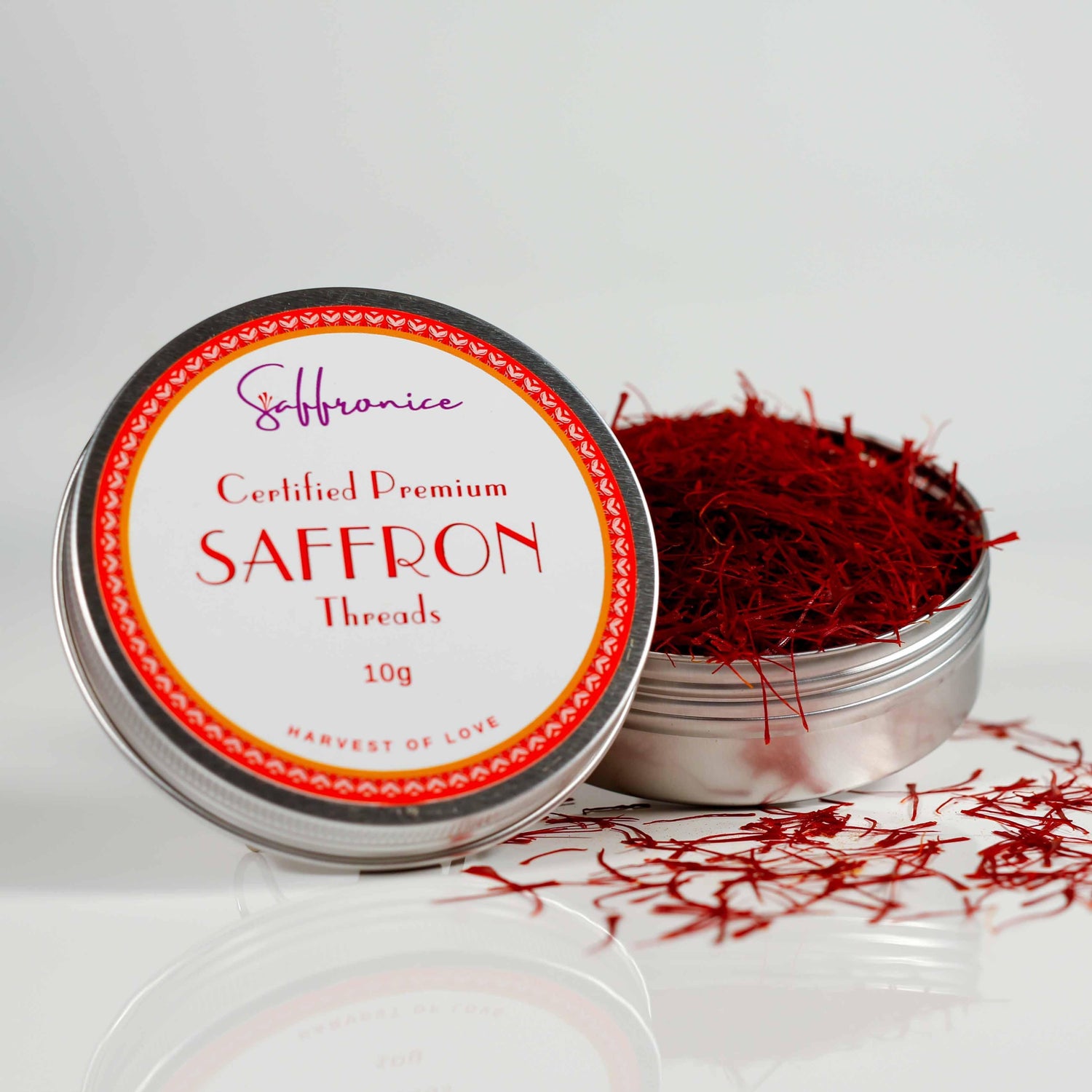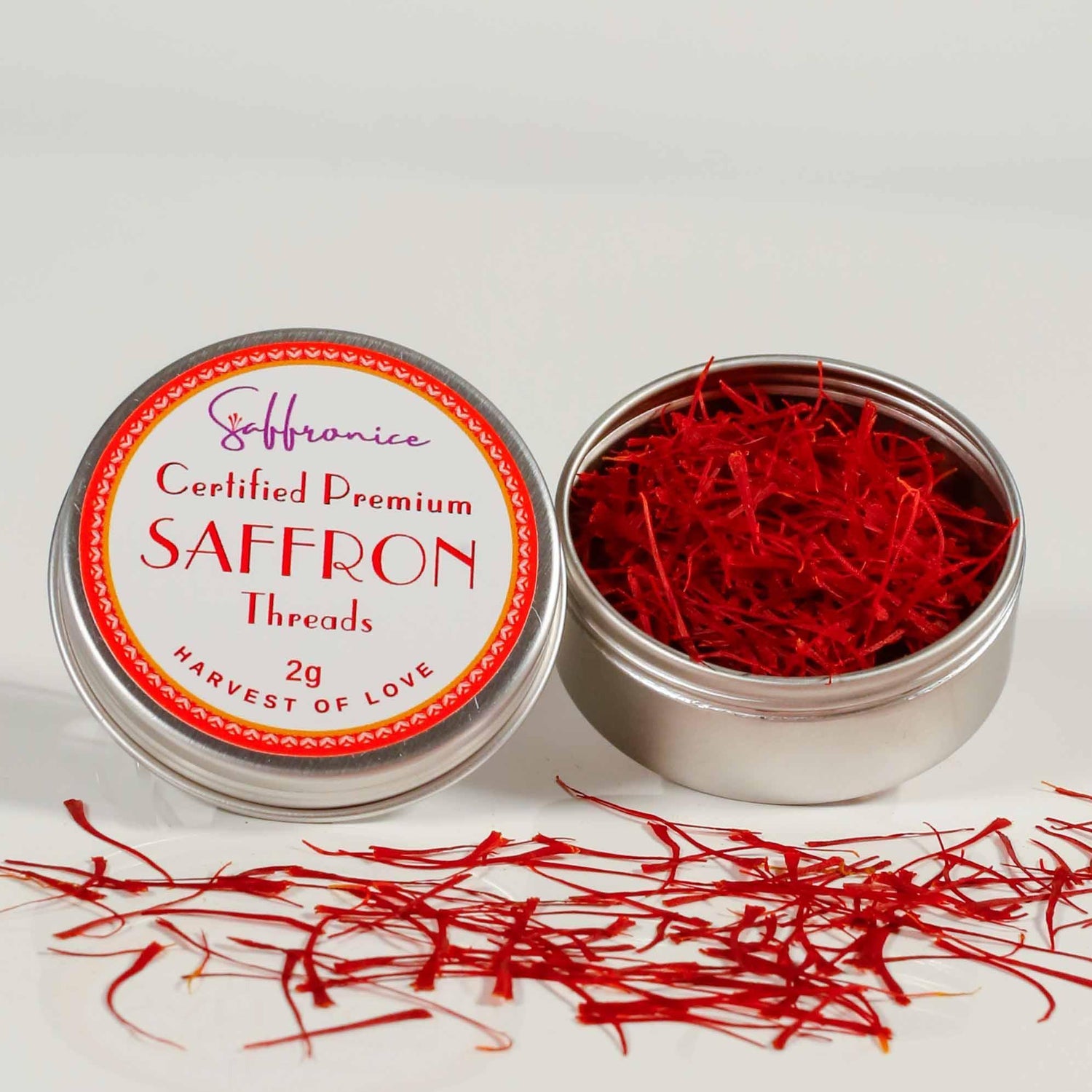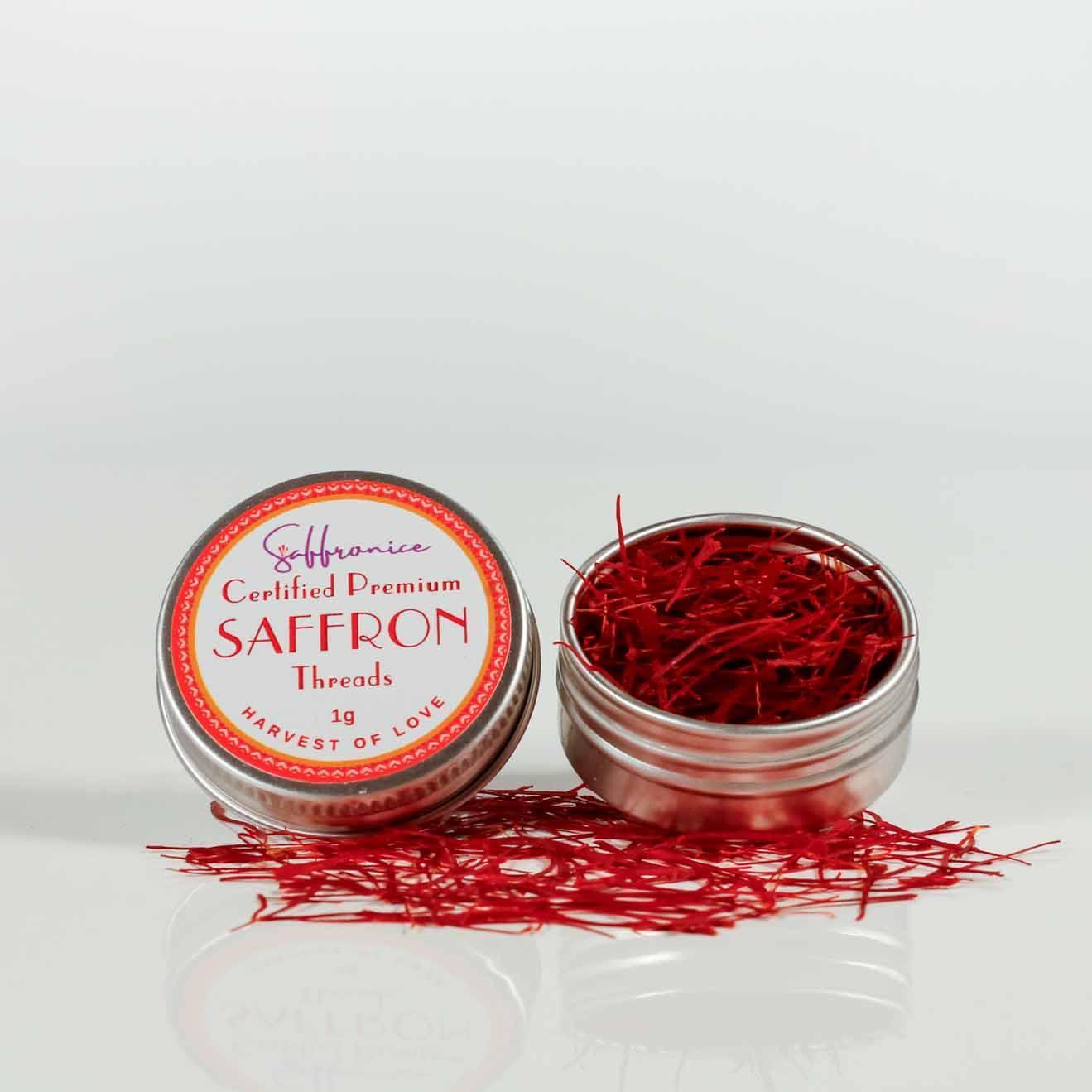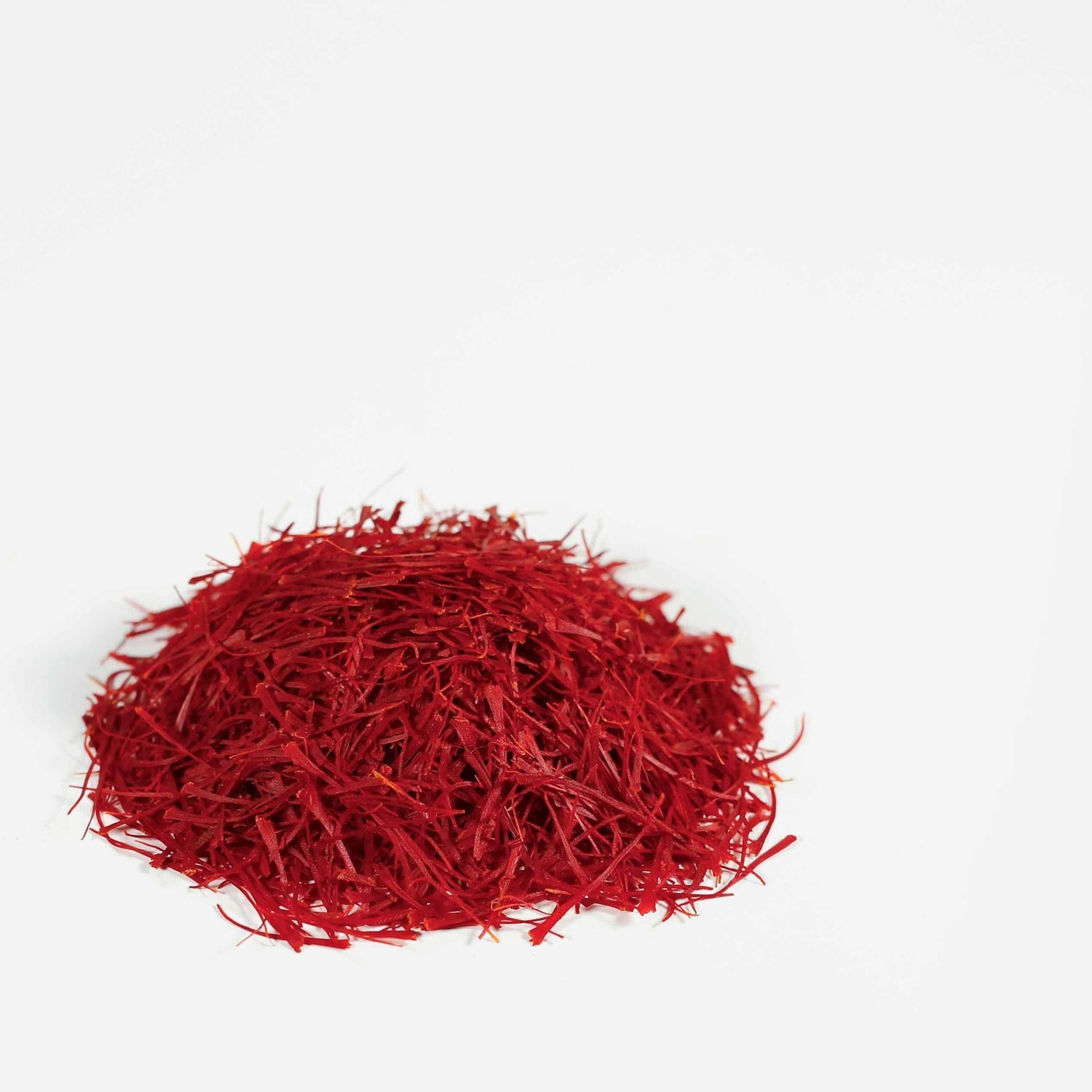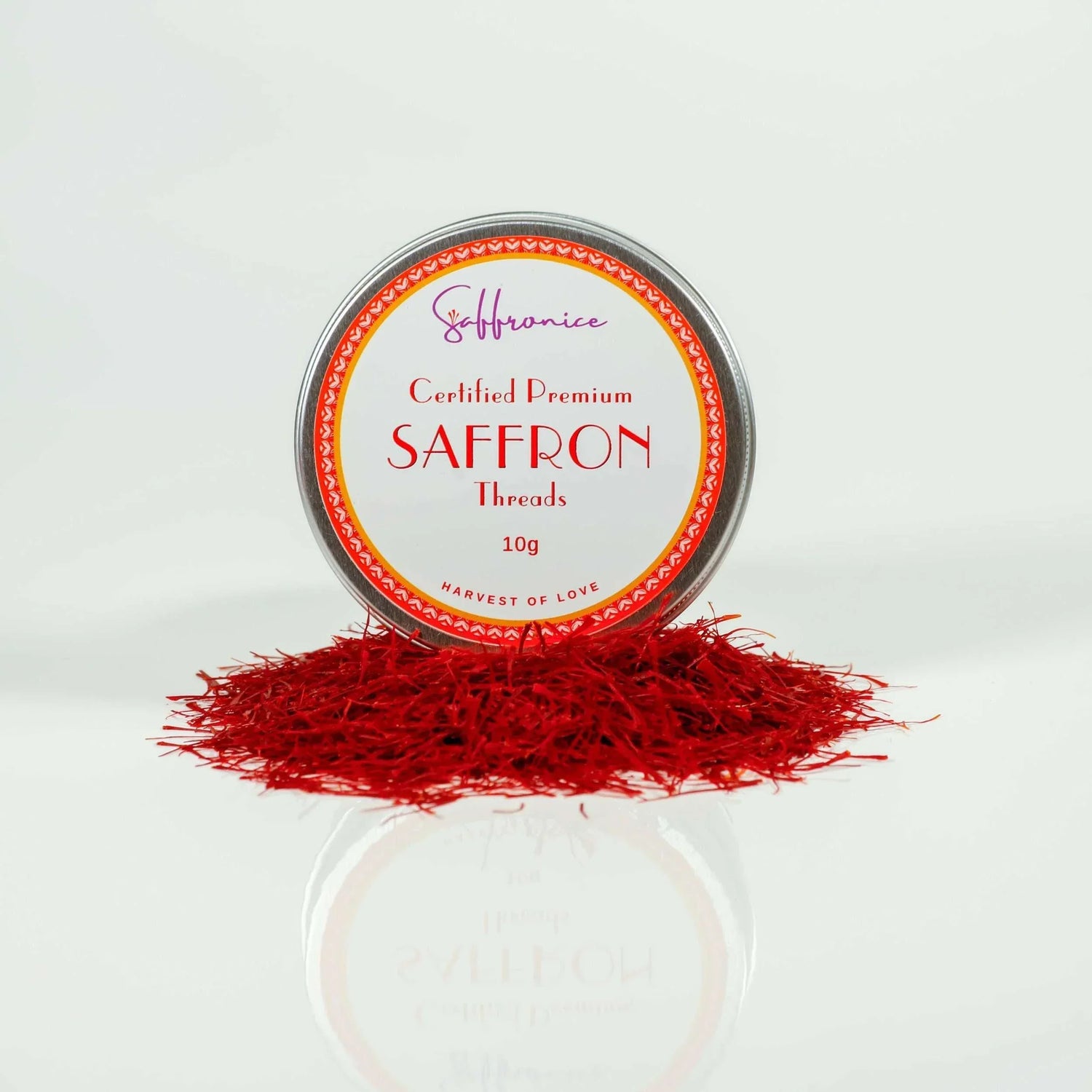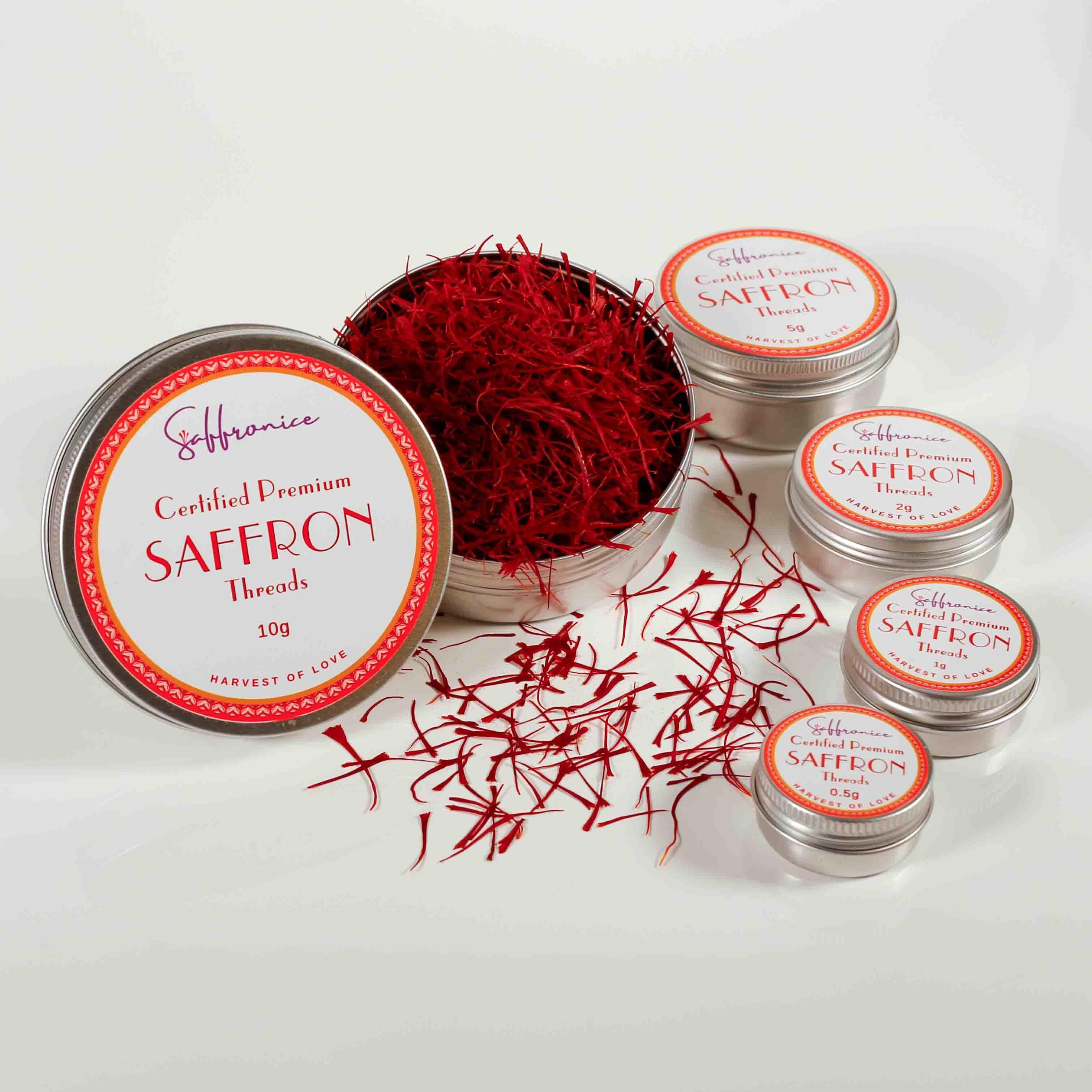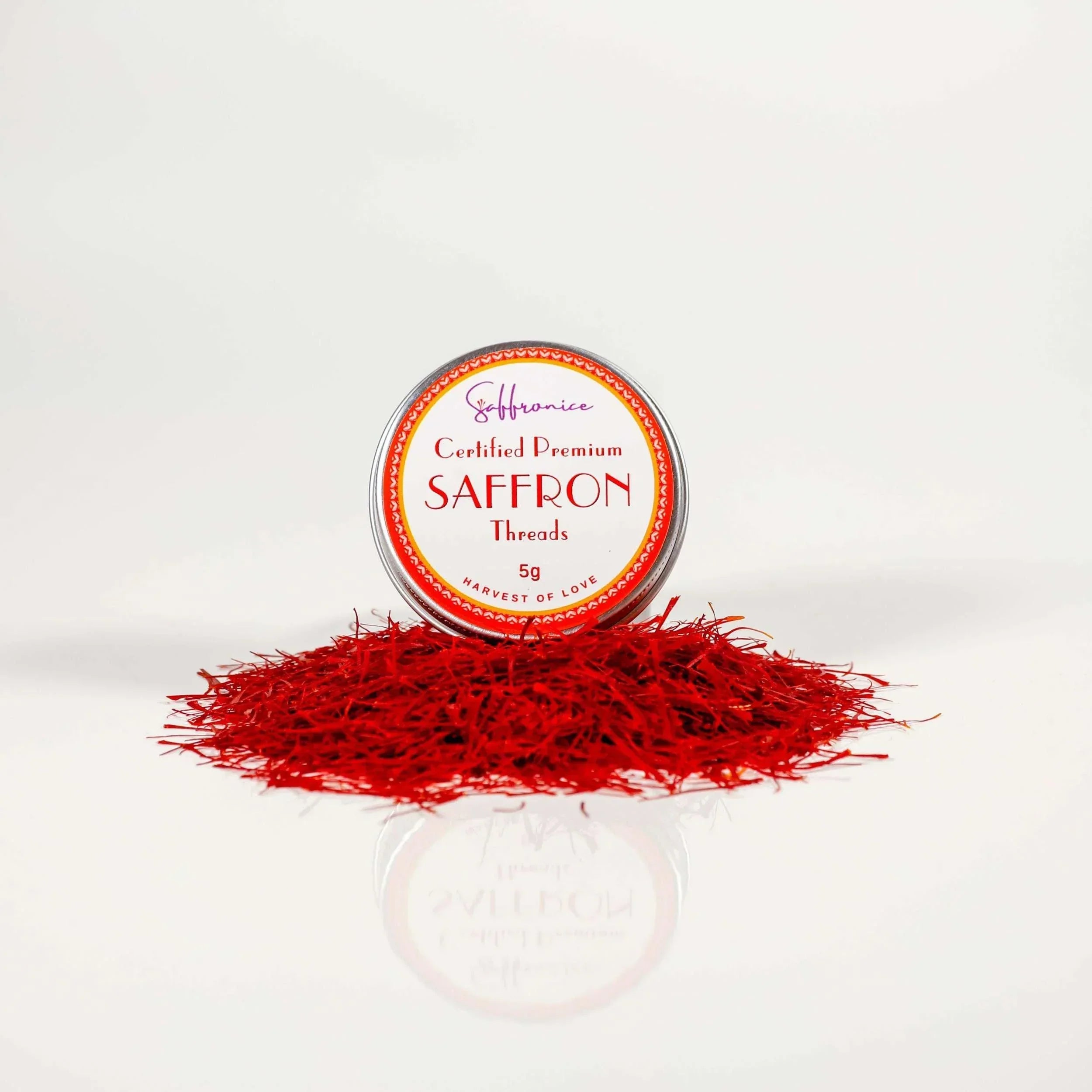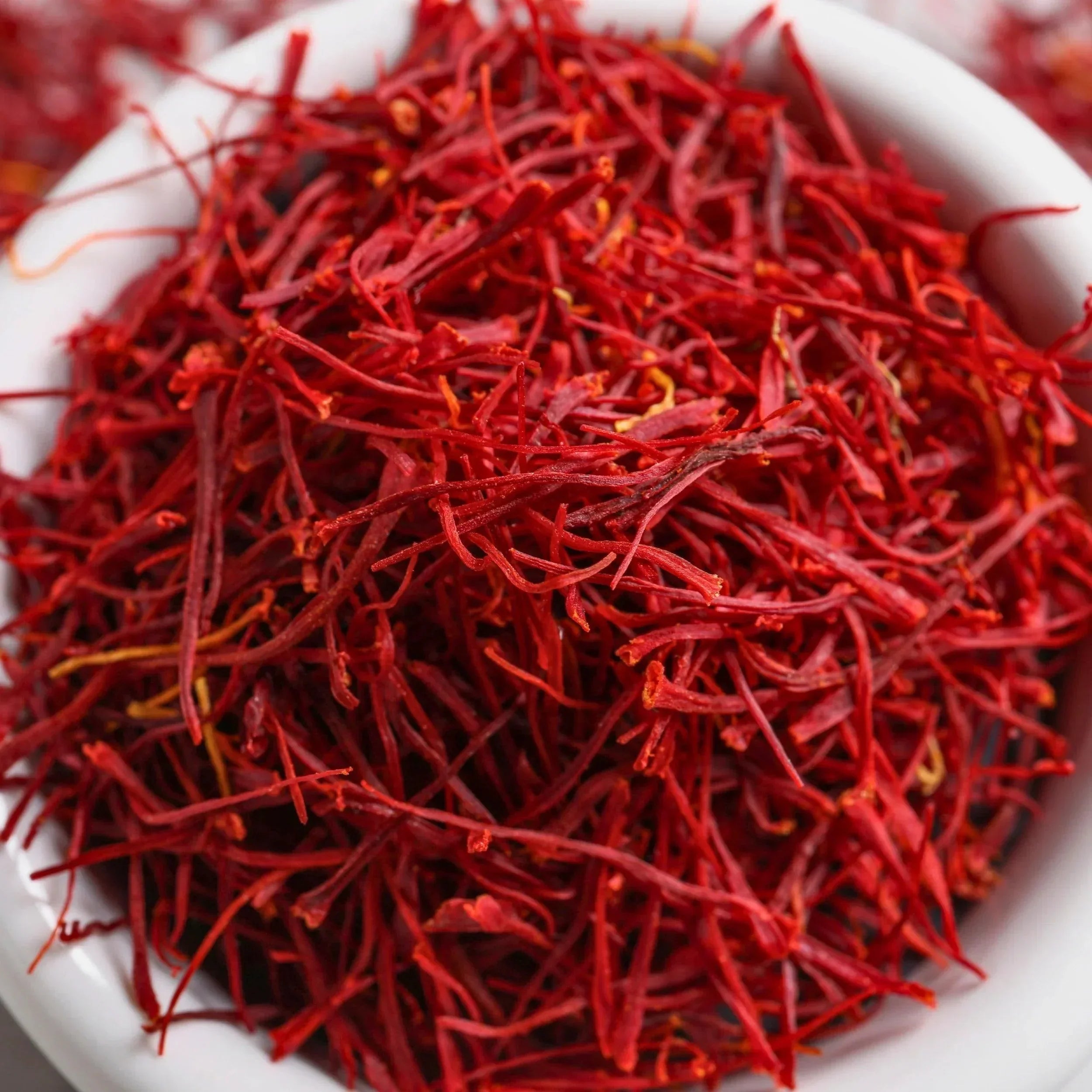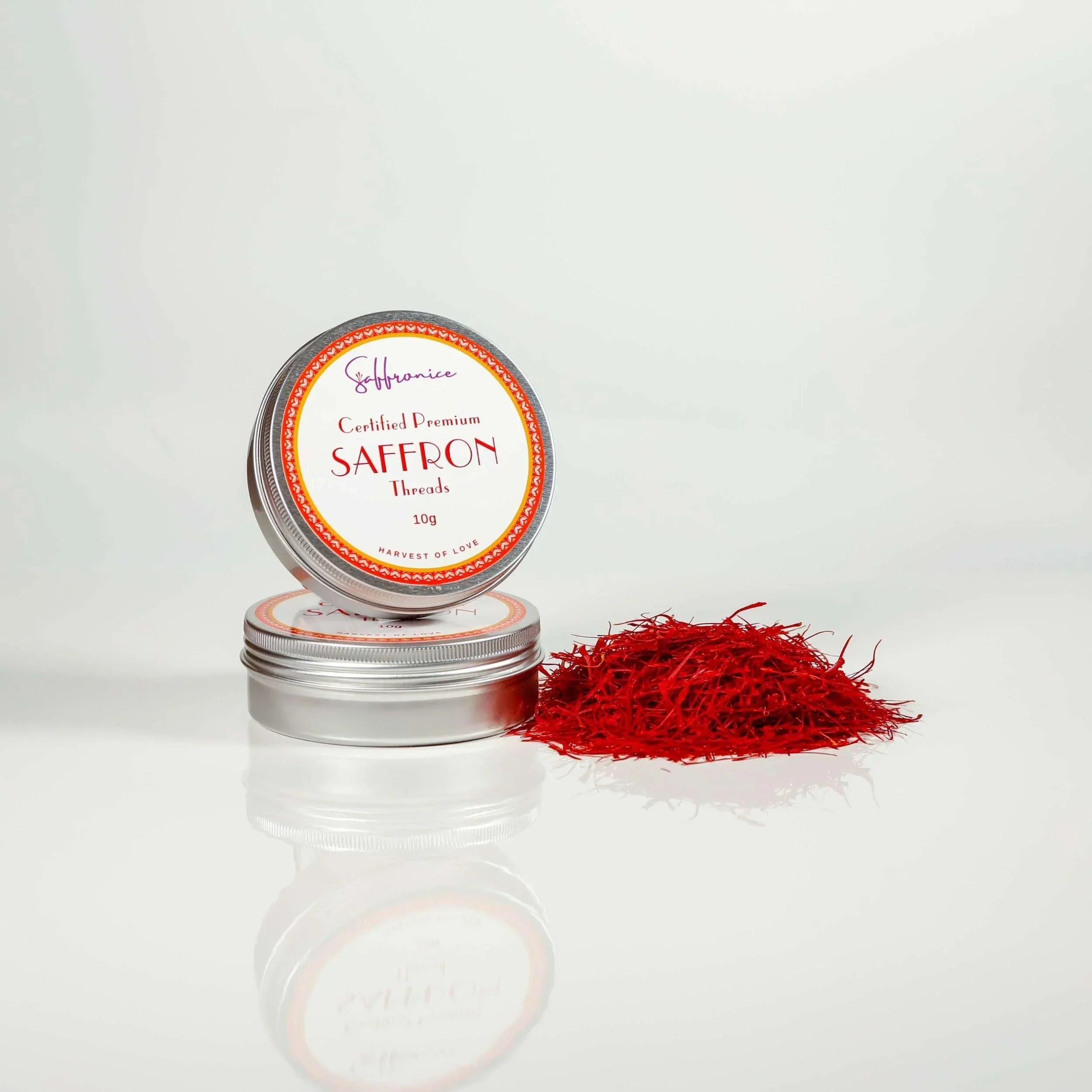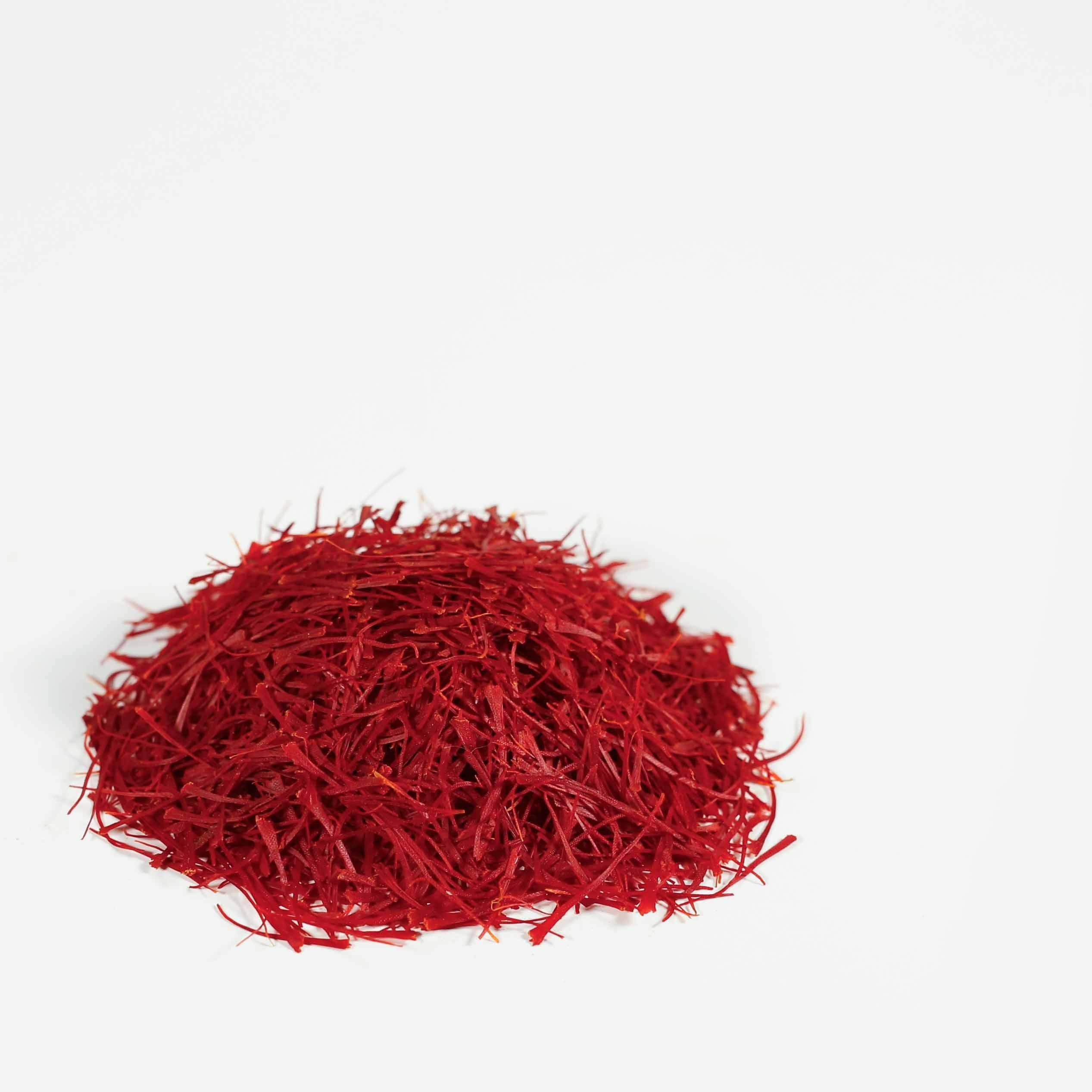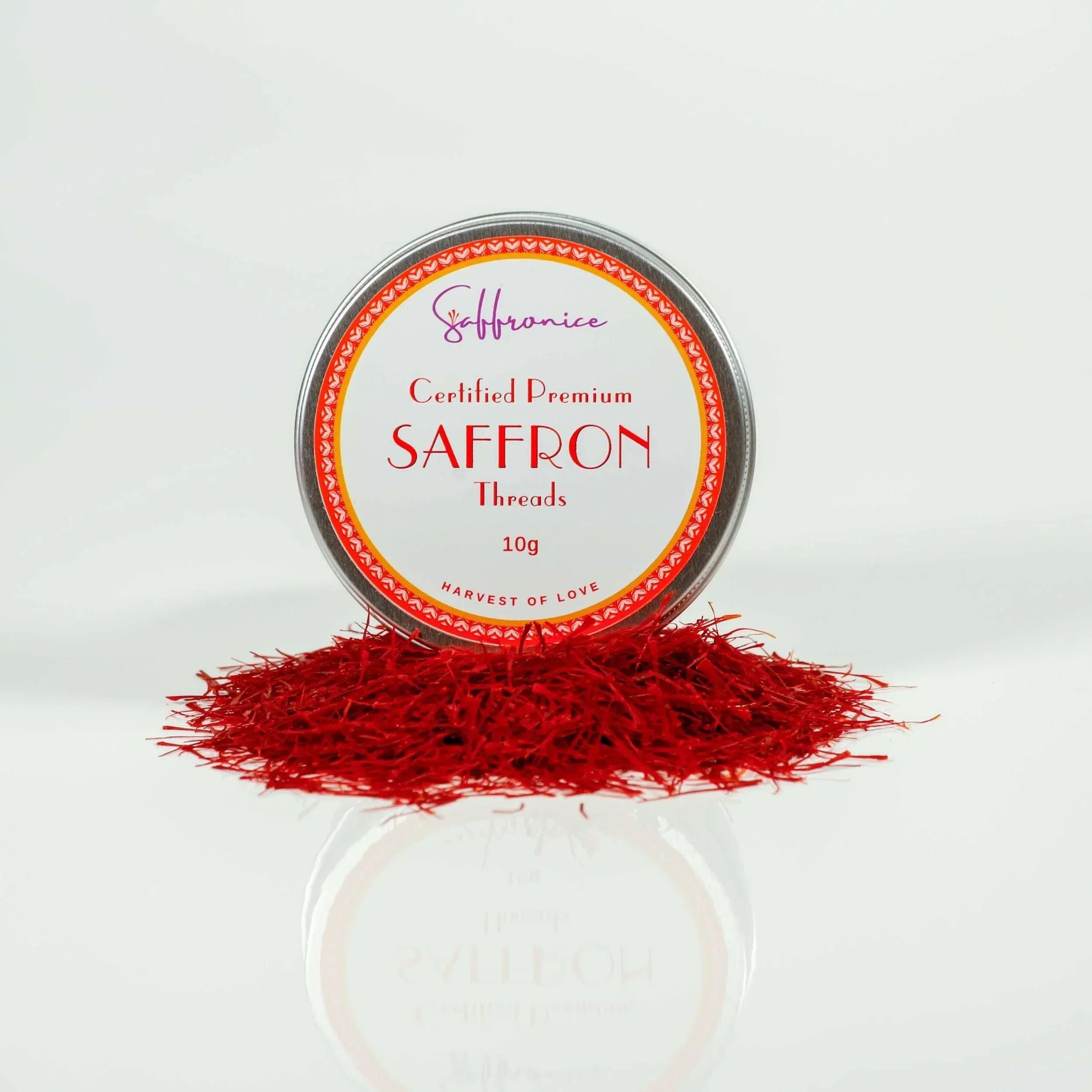

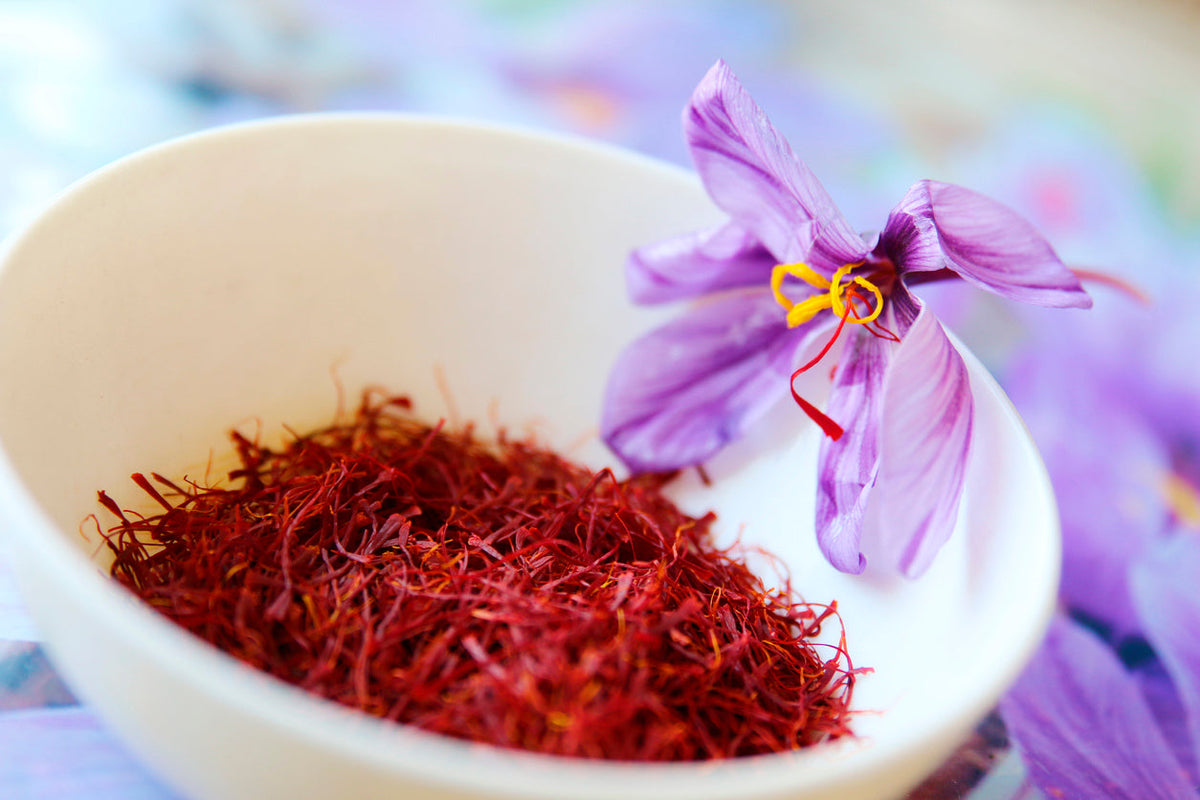
Did you know that the deep red saffron threads in your kitchen once grew inside a purple flower?
The saffron crocus (Crocus sativus) produces delicate purple flowers with three striking red stigma branches at their centre. These tiny red structures are what eventually become the saffron spice we use in cooking.
But why are the flowers purple while the saffron threads are red?
The answer lies in two different groups of natural plant pigments: anthocyanins, responsible for much of the flower's purple colour, and crocins, which contribute to the deep red appearance of the stigmas.
What Does a Saffron Flower Look Like?
Each saffron flower typically has six purple or lilac-coloured tepals, three yellow stamens and one red stigma divided into three branches.
The tepals are the colourful outer parts of the flower, while the yellow stamens produce pollen. At the centre, the three red stigma branches form the part that is harvested and dried to make saffron spice.
These red branches are connected to the flower's ovary by a slender structure called the style.

Why Are Saffron Flower Petals Purple?
The purple colour comes largely from natural plant pigments called anthocyanins.
Anthocyanins belong to the flavonoid family and contribute red, purple and blue colours to many flowers, fruits and other plant tissues.
Researchers have identified anthocyanin pigments in saffron's purple tepals, including compounds derived from delphinidin, petunidin and malvidin.
These pigments help explain why saffron flowers can range from pale lilac to deeper violet.
Anthocyanins are not unique to saffron. Similar pigments contribute to the colours of blueberries, grapes and many other flowers and fruits.
However, a different group of pigments is responsible for the distinctive colour of saffron's red stigmas.
Why Are Saffron Threads Red?
The red colour of saffron threads comes primarily from a different group of natural compounds.
Saffron stigmas accumulate pigments known as crocins, which belong to the apocarotenoid family.
These compounds contribute to the red colour of saffron stigmas. Interestingly, crocins are also responsible for much of the golden-yellow colour released when saffron is infused in water or added to food.
Research into saffron's pigment production has shown that crocins are formed through specialised biochemical processes involving carotenoid precursors.
Unlike the purple tepals, the stigmas accumulate large quantities of these colour-related compounds as they develop.
This creates the striking contrast between the flower's purple outer parts and its red centre.
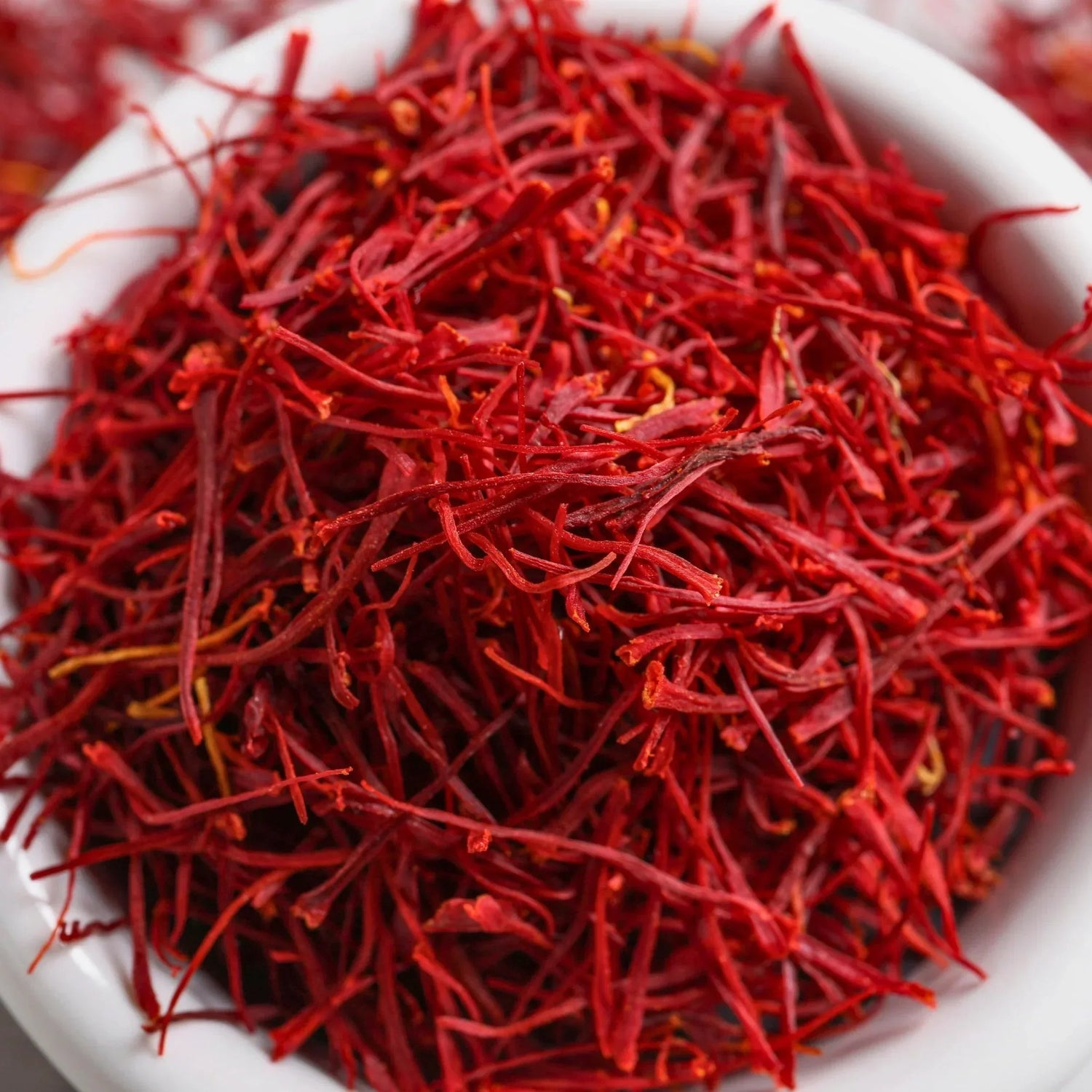
The stigmas may appear vivid crimson or orange-red when fresh, while properly dried saffron threads usually develop a darker red appearance.
Their colour is one of the most recognisable features of the finished spice.
Why Does Each Saffron Flower Have Three Red Threads?
A saffron flower normally produces one stigma divided into three red branches, which are commonly described as three saffron threads.
These branches form part of the flower's female reproductive structure.
The stigma's biological role is to receive pollen, although cultivated saffron is a sterile triploid plant that is propagated through corms rather than viable seeds.
Because each flower produces only three red stigma branches, a large number of flowers must be harvested to produce even a small quantity of saffron.
The delicate stigmas must also be separated carefully from the surrounding flower parts, making saffron harvesting particularly labour-intensive.
Why Aren't the Purple Petals Used as Saffron Spice?
Although the petals and stigmas come from the same flower, they have different chemical compositions.
The red stigmas contain the compounds most closely associated with saffron's culinary characteristics:
- Crocins, which contribute colouring strength.
- Picrocrocin, associated with saffron's characteristic bitterness.
- Safranal, an important contributor to its aroma.
The purple tepals contain other compounds, particularly flavonoids and anthocyanins.
This means the petals do not provide the same combination of colour, flavour and aroma as the harvested stigmas.
Scientists have investigated possible uses for saffron petals in food-related materials and other applications, but these remain separate from traditional saffron spice production.
The spice sold as saffron is produced from the stigmas, not the purple flower petals.
How Do the Red Stigmas Become Saffron Threads?
When saffron crocus flowers bloom in autumn, growers collect the flowers and carefully separate the red stigma branches.
The fresh stigmas are then dried to reduce moisture and develop the characteristics associated with finished saffron, including its distinctive aroma.
Because the usable spice comes from such a small part of each flower, harvesting and processing require considerable care.
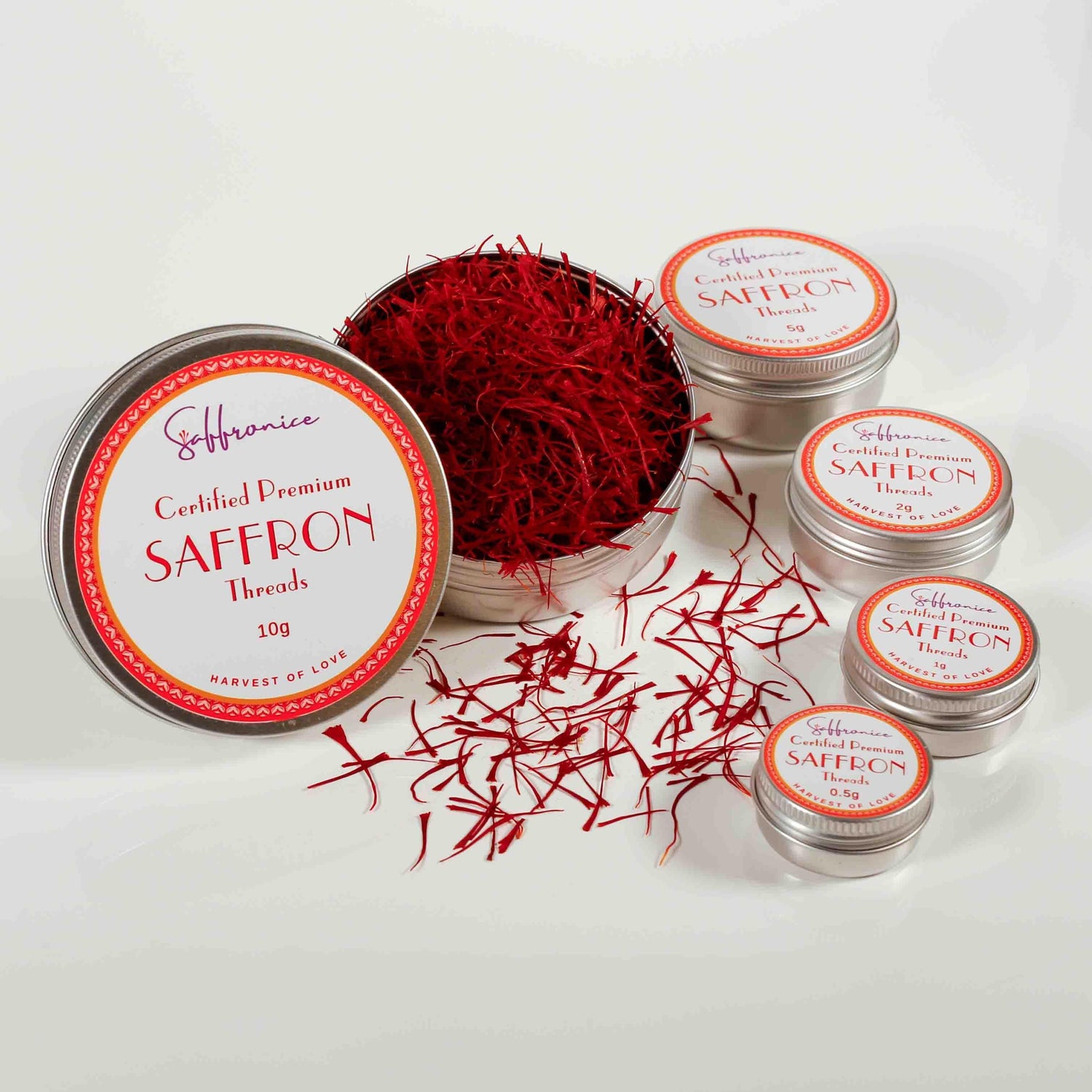
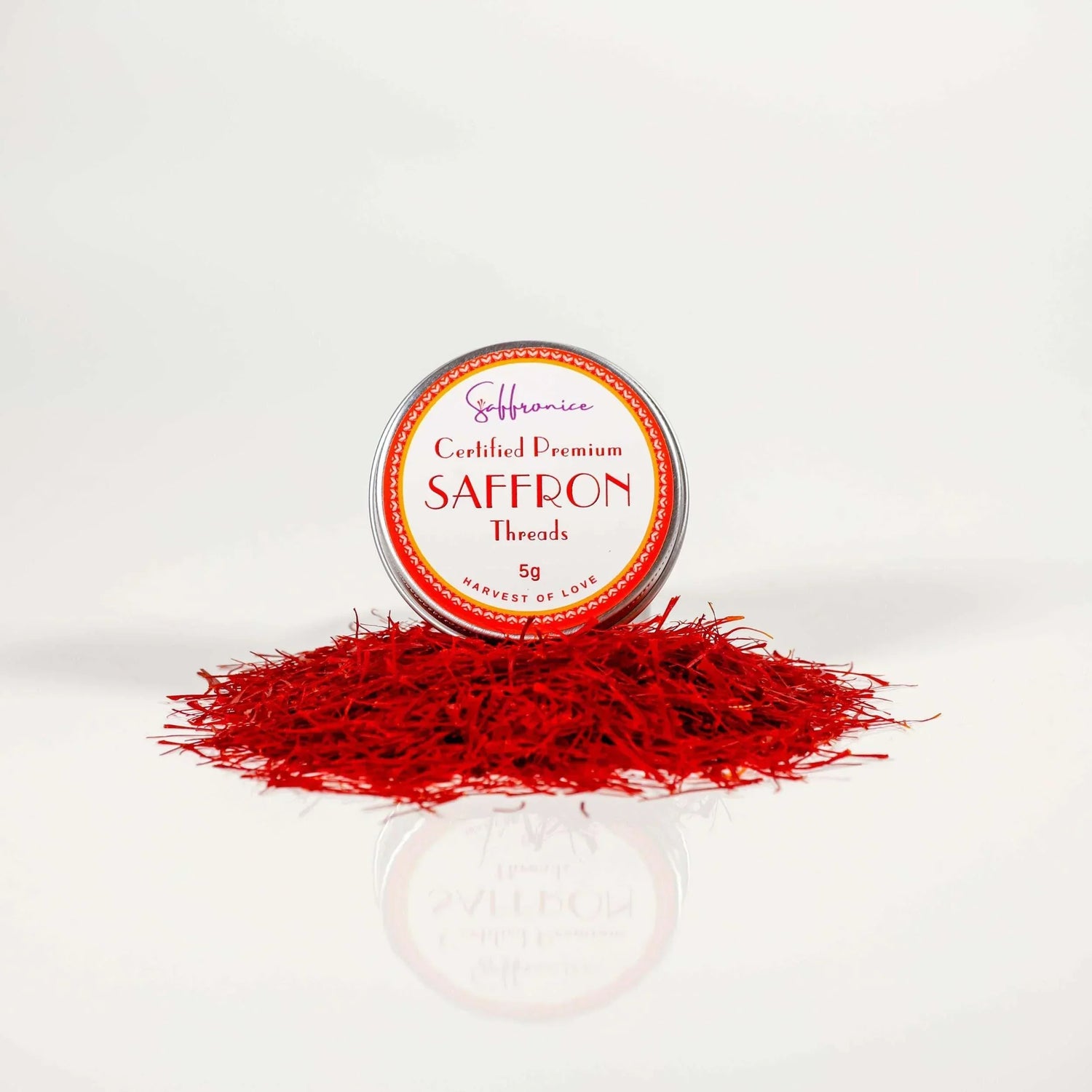
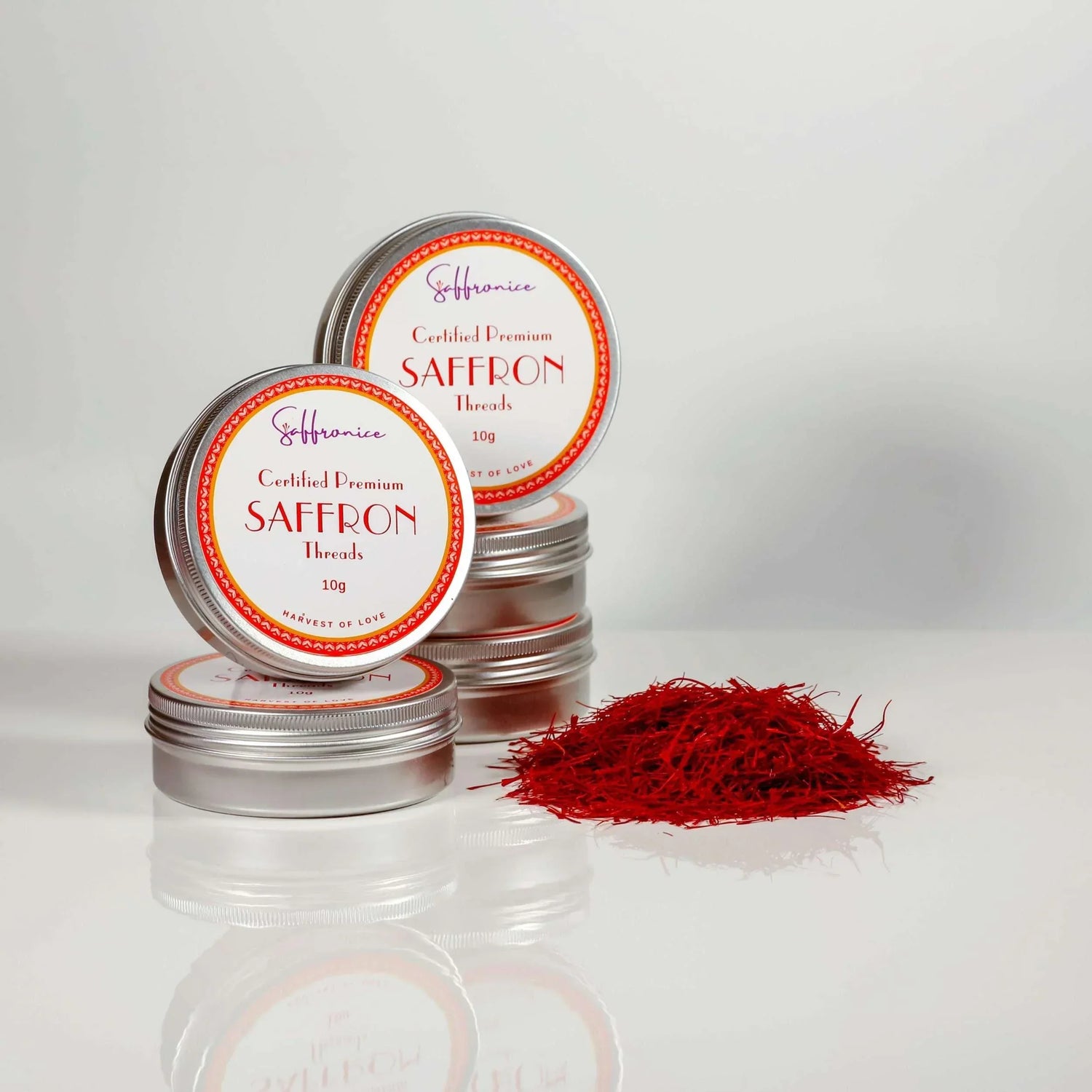
During saffron harvesting and processing, the red stigmas are carefully separated from the flowers before being dried into the familiar culinary spice.
Careful harvesting is especially important because the spice comes from such a small, delicate part of each flower.

Can Other Purple Crocus Flowers Produce Saffron?
Not every purple crocus flower produces culinary saffron.
The spice comes specifically from Crocus sativus, even though other plants in the Crocus genus may have similar-looking flowers.
Some crocus species have purple tepals and coloured stigmas, making visual identification difficult for beginners.
Other plants commonly called autumn crocuses may belong to entirely different genera, including Colchicum, which contains poisonous species.
For this reason, colour alone should never be used to identify flowers as edible saffron.
Anyone interested in growing saffron should obtain correctly identified Crocus sativus corms from a reputable supplier.
Frequently Asked Questions
Are Saffron Threads Actually Flower Petals?
No. Saffron threads are dried stigma branches from the centre of the Crocus sativus flower. The purple tepals are separate structures.
How Many Saffron Threads Come From One Flower?
Each flower normally has three red stigma branches. These are carefully collected and dried to produce the spice.
Do Purple Saffron Petals Contain Crocin?
Saffron petals have a different pigment profile from the stigmas. Their purple appearance is mainly associated with anthocyanins, although research has identified additional compounds in different flower tissues.
Are All Purple Crocus Flowers Saffron?
No. Only Crocus sativus produces the culinary spice known as saffron. Similar-looking flowers should not be assumed to be edible.
The Bottom Line
The striking colour difference between saffron's purple flower and red threads comes from the pigments concentrated in different parts of the plant.
Anthocyanins help create the purple tepals, while crocins contribute to the red stigmas harvested as saffron.
Each flower produces just three red stigma branches, which are carefully separated and dried.
The next time you see saffron threads in a jar, remember that they once formed the tiny red centre of a delicate purple flower.
References
Moratalla-López et al. (2019), Molecules. Bioactivity and Bioavailability of the Major Metabolites of Crocus sativus L. Flower. (2019).
Castillo, Fernández & Gómez-Gómez (2005), Plant Physiology. Implications of carotenoid biosynthetic genes in apocarotenoid formation during the stigma development of Crocus sativus and its closer relatives. Plant Physiology, 139(2), 674–689.
Aissa et al. (2023), Journal of Medicine and Life. Phytochemistry, Quality Control and Medicinal Uses of Saffron (Crocus sativus L.): An Updated Review. (2023). Journal of Medicine and Life, 16(6), 822–836.