
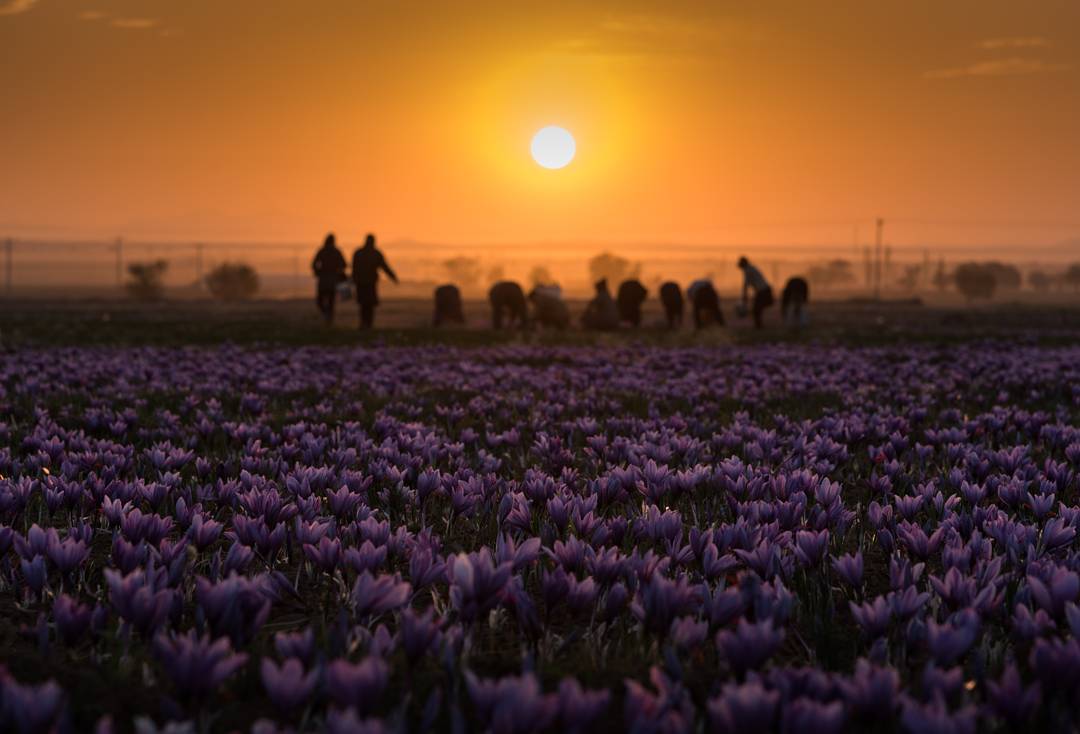
Saffron is closely associated with long-established growing regions such as Iran, Afghanistan and parts of the Mediterranean. But cultivation is also being explored in newer locations.
In Saudi Arabia’s AlUla Governorate, saffron cultivation trials are expanding as part of a wider effort to introduce high-value crops and diversify local agriculture.
The project is being led by the National Centre for Sustainable Agriculture Research and Development, known as Estidamah, with cultivation work in AlUla carried out in cooperation with the Royal Commission for AlUla.
Why Is Saffron Being Grown in AlUla?
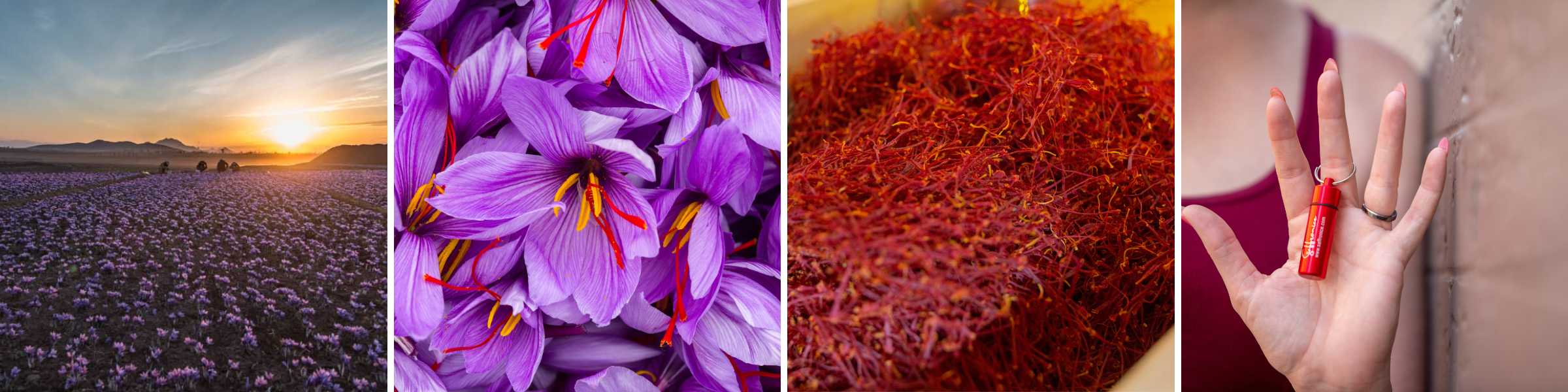 AlUla is best known for its dramatic desert landscape and cultural heritage, but agriculture has long formed part of the region’s history.
According to official Saudi reporting, researchers and growers have been testing whether AlUla’s environmental and soil conditions can support successful saffron cultivation.
The trials form part of a broader Saudi project aimed at developing saffron as a high-value agricultural crop while providing growers with technical support, training and field guidance.
An Estidamah workshop held in AlUla also covered land preparation, planting saffron corms and opportunities for expanding saffron production.
What Have the Trials Found So Far?
The project has reported successful saffron cultivation across several participating farms.
The AlUla work forms part of a much broader Saudi saffron localisation project. Estidamah reports that research and field trials have taken place across 10 regions of the Kingdom, with more than 500,000 saffron corms distributed to over 43 farmers and research outcomes applied on more than 40 farms.
According to the Saudi Press Agency, scientific and field trials were carried out on several farms, including in AlUla, with the trials indicating that the region's environment and soils can support successful saffron cultivation.
The Saudi Gazette also reports that farmers involved in the project received guidance across different stages of production, including soil preparation, crop management, harvesting and processing.
This is important because growing saffron involves more than simply planting corms. Climate, soil conditions, planting practices, crop management and harvesting all influence how successfully the crop develops.
What Does the “Grade One” Saffron Claim Mean?
Some reporting on the AlUla trials also highlights a quality result from Saudi Arabia's broader saffron localisation project, describing Saudi saffron as achieving “Grade One” or “first choice” status.
There is useful context behind that wording.
Official Saudi sources report that laboratory testing of Saudi saffron from the broader localisation project was carried out through internationally accredited laboratories and that the tested saffron complied with the ISO 3632 saffron standard. The Saudi Press Agency describes the tested Saudi saffron as “first choice” according to ISO 3632. The available official reporting does not clearly establish that the laboratory-tested samples came specifically from AlUla.
Rather than treating “Grade One” as a standalone marketing label, it is more accurate to understand the result in the context of the reported ISO testing.
ISO 3632 is an international standard for dried saffron that sets specifications and testing requirements used to assess saffron quality and characteristics.
Does AlUla Produce Large Amounts of Saffron Yet?
Not based on the available reporting.
The current story is about expanding cultivation trials and developing local production, rather than AlUla suddenly becoming one of the world’s major saffron-producing regions.
That distinction matters.
The available reports do not indicate that AlUla is currently producing saffron at a scale large enough to materially affect global supply.
Instead, the project is significant because it shows saffron cultivation being tested and developed in another geographic region.
Why New Saffron-Growing Regions Matter

Saffron cultivation has traditionally been concentrated in a relatively small number of regions.
That is partly because Crocus sativus has particular growing requirements. The plant develops from underground corms, and successful saffron cultivation depends on suitable planting material as well as local climate, soil and seasonal conditions.
The timing of flowering also matters because saffron is harvested and processed during a concentrated period when the flowers emerge, and their red stigmas can be collected.
Projects such as the one in AlUla show how growers and researchers are investigating whether saffron can become a viable crop in other suitable environments.
This does not mean traditional growing regions are being replaced. Instead, new projects can gradually broaden the geographic story of saffron production.
Why This Matters to Saffron Buyers
For consumers, the AlUla project is less about expecting an immediate new source of saffron on store shelves and more about understanding how the crop is evolving.
If projects like this develop into sustained commercial production, emerging growing regions could gradually add greater geographic diversity to saffron cultivation. Even during the trial stage, projects like these can also provide researchers and growers with more information about how saffron responds to different climates, soils and production systems.
This is one reason emerging saffron-growing regions are worth following. Climate, geography, soil and cultivation practices all contribute to the wider story of saffron, and projects such as AlUla show how this ancient crop is being explored in new growing environments.
For now, however, AlUla should be viewed as a developing cultivation initiative rather than evidence of a major shift in international saffron supply. Traditional growing regions remain central to global production, while newer regions add another dimension to how and where saffron may be cultivated in the future.
Sources
National Center for Sustainable Agriculture Research and Development (Estidamah). Reporting on Saudi saffron cultivation and ISO 3632 testing. April 2026.
Saudi Press Agency. Saffron Cultivation in AlUla: A New Step in Agricultural Diversification. April 2026.
https://spa.gov.sa/fr/N2555261
Saudi Gazette. AlUla saffron earns ‘Grade One’ status as cultivation expands. April 9, 2026.