
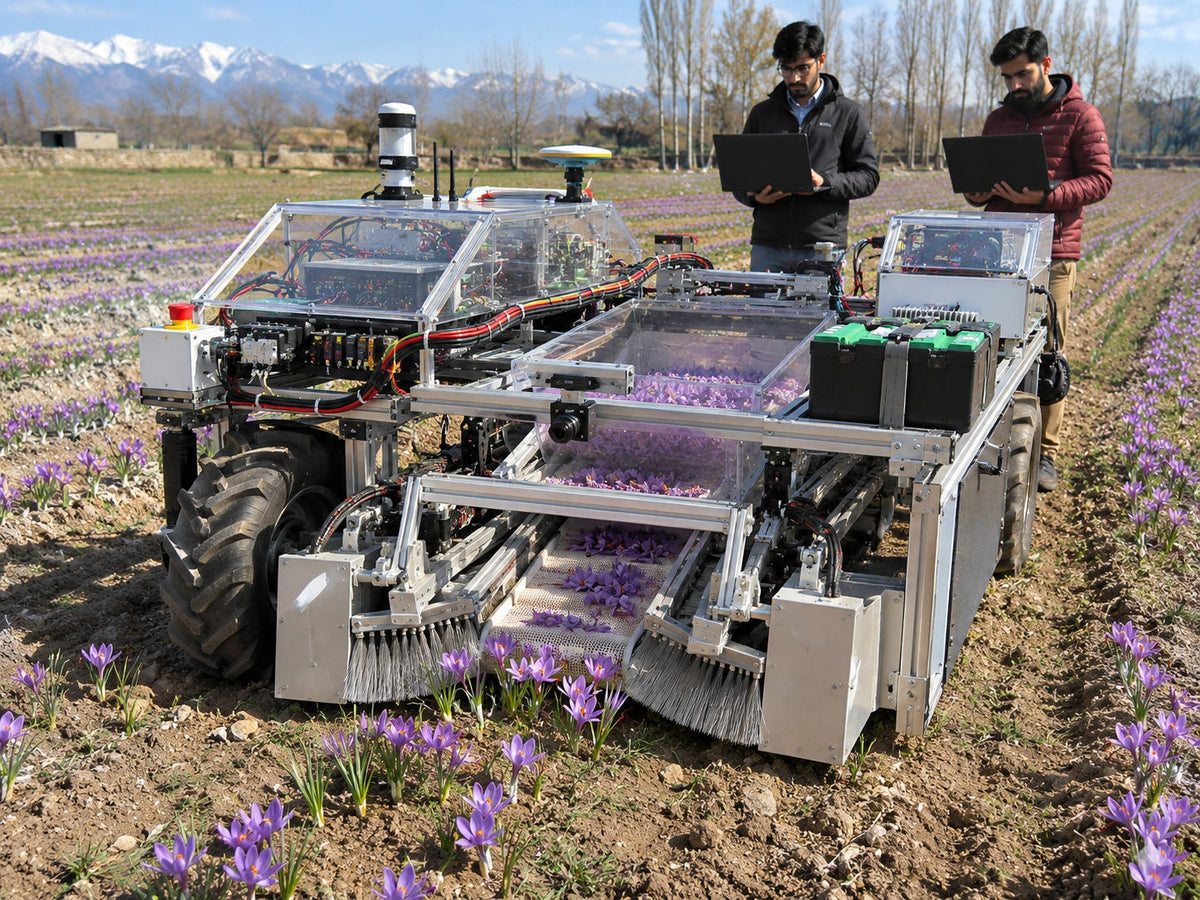
Saffron harvesting robots are being tested in Kashmir as researchers explore how agricultural technology could reduce the manual labour involved in producing one of the world's most delicate spices.
On 2 November 2026, researchers demonstrated experimental robotic systems at the Advanced Research Station for Saffron and Seed Spices in Pampore. The technology focuses on three labour-intensive tasks: picking saffron flowers, removing weeds and separating the red stigmas used to produce the spice.
Although the demonstration marks an interesting development in agricultural technology, the machines remain experimental. Further testing is needed before they can be considered for widespread commercial use.
What Happened During Kashmir's Saffron Robotics Demonstration?
Researchers from Sher-e-Kashmir University of Agricultural Sciences and Technology of Kashmir (SKUAST-K) demonstrated experimental robotic systems to support saffron farming, with reported support from India's Ministry of Electronics and Information Technology (MeitY).
Three Robotic Systems Are Being Developed
The project focuses on three tasks: flower harvesting, weed removal and stigma separation.
Vision-guided robotic arms are being developed to identify and pick saffron flowers, while mechanical systems aim to separate the delicate red stigmas.
An autonomous weeding robot was also demonstrated, designed to identify and remove weeds, with some functions controlled through a mobile app.
These technologies aim to reduce manual labour while preserving the careful handling saffron requires.
Why Is Saffron Harvesting Difficult to Automate?
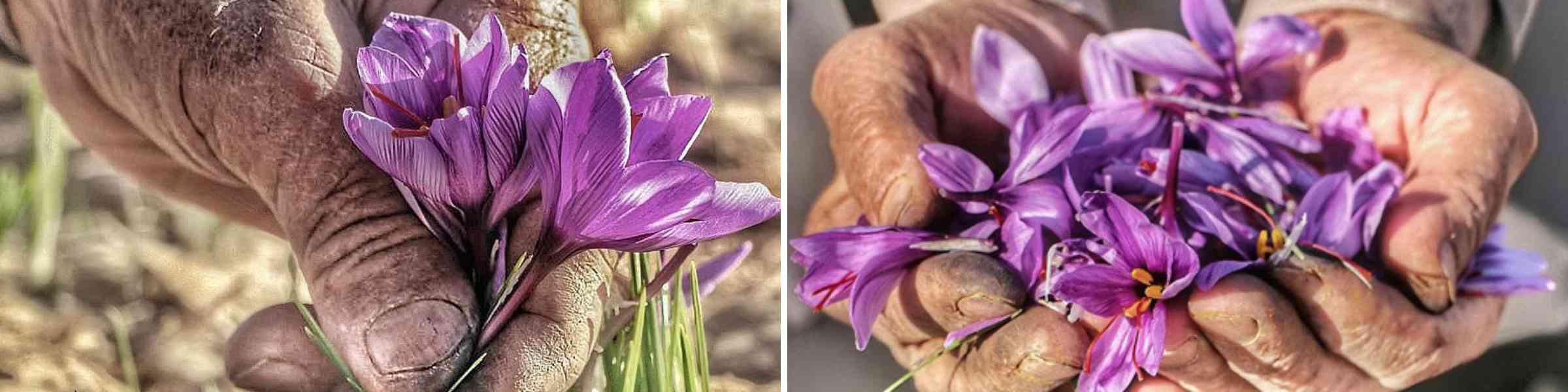
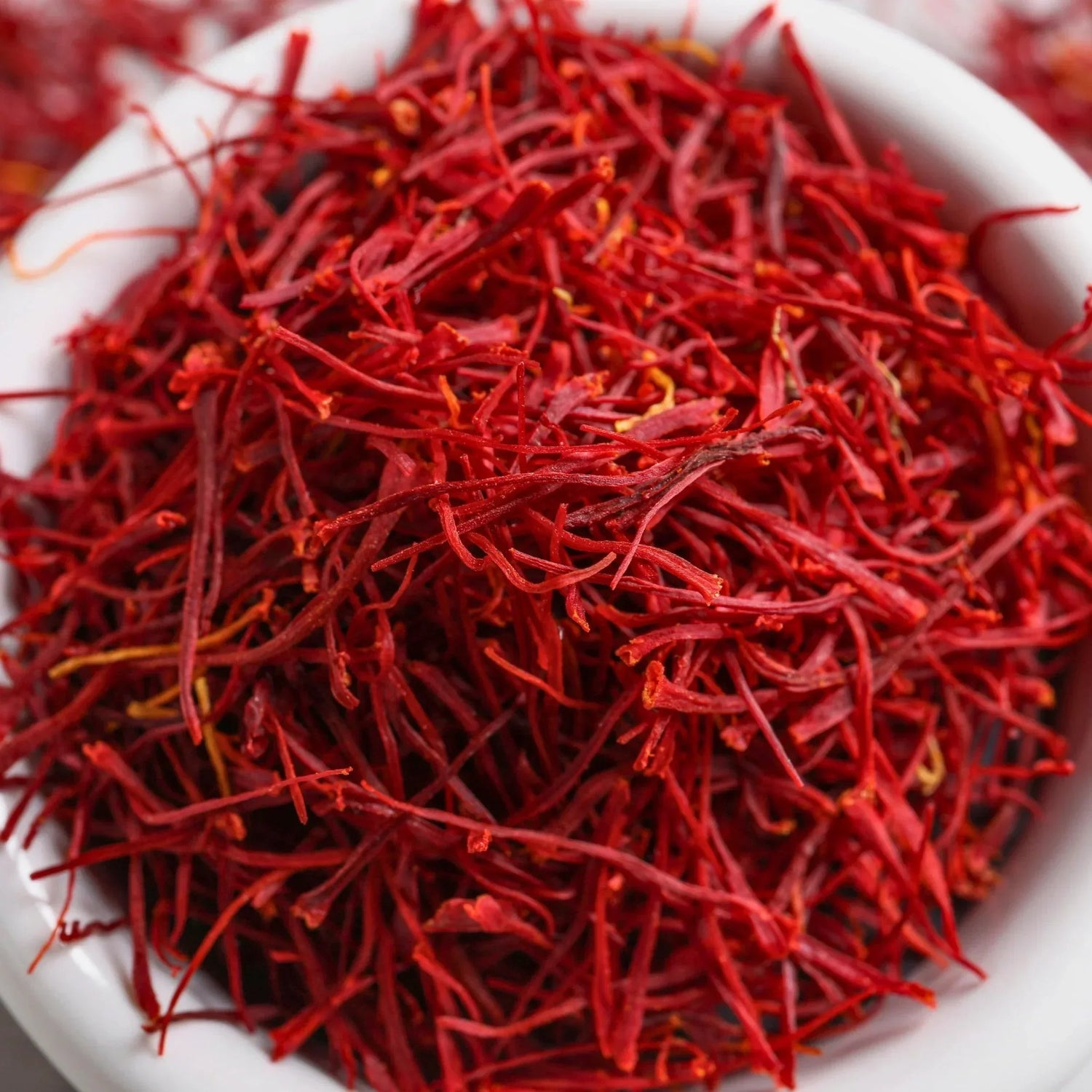
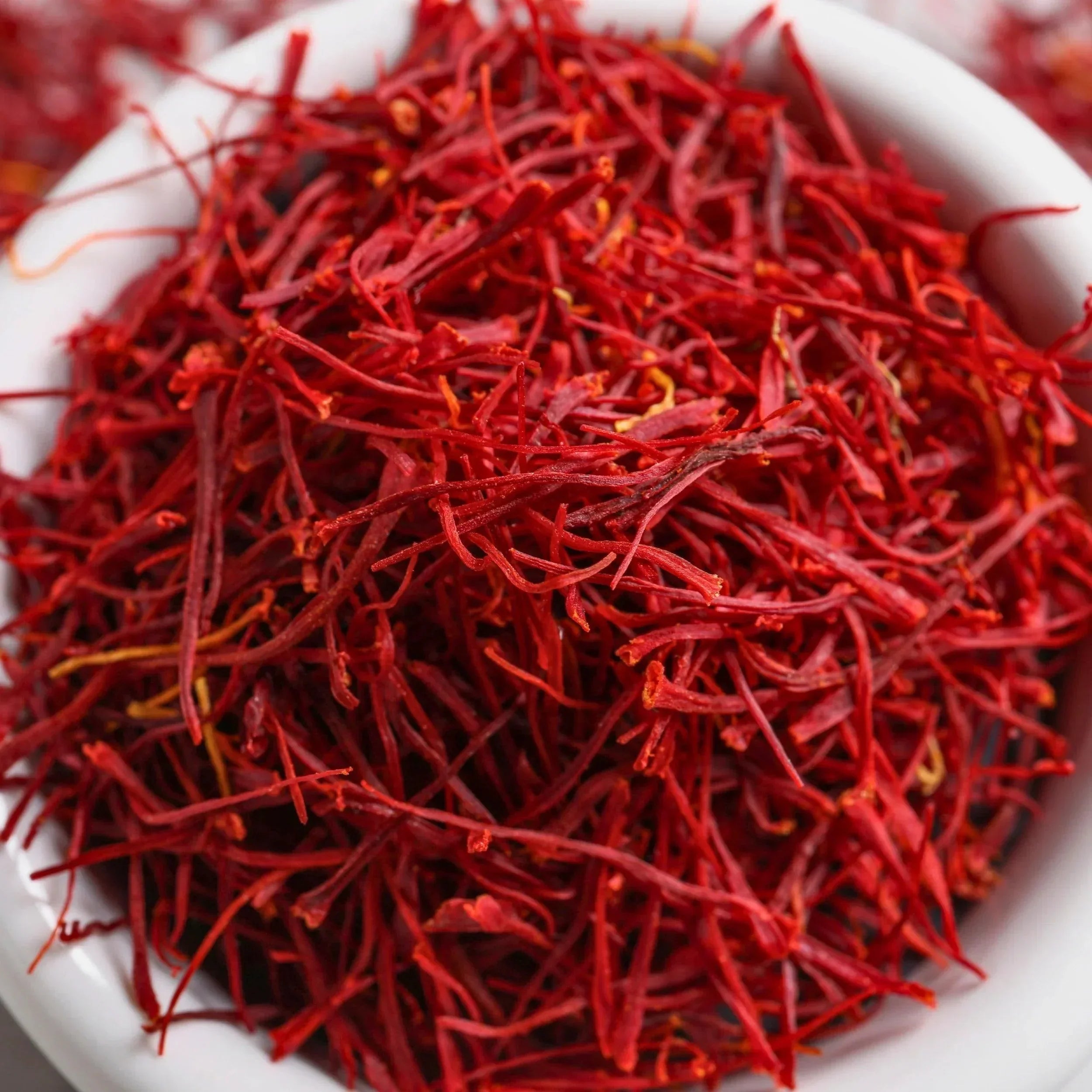
Saffron comes from the three red stigmas of the Crocus sativus flower.
Unlike many agricultural crops, saffron requires precise handling. Understanding how saffron is harvested helps explain why automating flower collection and stigma separation presents unique challenges.
Thousands of Flowers Must Be Handled
According to Professor Syed Zameer Hussain of SKUAST-K, approximately 160,000 flowers are needed to produce one kilogram of dried saffron.
These delicate flowers require careful handling and precise stigma separation. As seen in traditional saffron harvesting techniques, automating these tasks presents significant challenges.
The Harvesting Season Is Short
In Kashmir, saffron flowers during autumn. The seasonal nature of growing saffron gives farmers limited time to harvest and process their crops.
Labour shortages and declining interest among younger generations add to these challenges, encouraging researchers to explore automation.
How Do the Experimental Saffron Robots Work?
Researchers in Kashmir are developing specialised robotic systems for harvesting flowers, separating stigmas and removing weeds.
Robotic Arms for Flower Harvesting
Vision-guided robotic arms are designed to identify and pick saffron flowers. Researchers are testing whether these machines can handle delicate flowers accurately without causing damage.
Machines for Stigma Separation
Mechanical systems are being developed to separate the valuable red stigmas from harvested flowers. The challenge is maintaining accuracy and quality while reducing manual work.
Automated Weed Management
An autonomous weeding robot is designed to identify and remove weeds from saffron fields.
The system has reportedly undergone testing in November, March and June–July, with further trials needed to assess its reliability under different field conditions.
Could Robotics Help Kashmir's Saffron Farmers?
If successful, robotic systems could reduce manual workloads, support timely harvesting and improve efficiency in saffron cultivation.
Addressing Labour Shortages
Automated flower picking and stigma separation could help farmers manage labour shortages during the short harvesting season. Researchers also hope the technology will attract younger farmers, although its benefits remain unproven at a commercial scale.
Supporting Traditional Farming Practices
Rather than replacing traditional methods, robotics could assist farmers with repetitive tasks.
Researchers are gathering farmer feedback to ensure the machines are practical, affordable and suitable for smaller farms.
When Will Saffron Harvesting Robots Be Available?
Researchers are continuing trials and improvements, with 2027 mentioned as a possible development target rather than a confirmed commercial launch date.
The machines must demonstrate reliable performance in real farming conditions before wider adoption.
Challenges Before Commercial Adoption
Researchers must assess harvesting accuracy, operating speed, reliability and maintenance needs across different field conditions.
Affordability is another concern, particularly for smaller farms. So far, there is no confirmed evidence that these robots have increased commercial saffron yields or reduced production costs.
What Could This Mean for the Global Saffron Industry?

Although the experiments are taking place in Kashmir, the challenges they address are familiar to growers in other producing regions, where traditional saffron cultivation continues to depend on skilled workers and careful harvesting.
Traditional saffron cultivation depends on careful harvesting, skilled workers and labour-intensive processing.
If robotic technology becomes reliable and commercially practical, similar systems could eventually be explored elsewhere.
However, different growing environments may require changes to the machines before they can be used successfully.
The project highlights how agricultural researchers are combining traditional crop knowledge with modern engineering to investigate new approaches to saffron production.
What Happens Next for Kashmir's Saffron Robots?
Kashmir's November 2026 demonstration highlights how researchers are exploring robotics to support traditional saffron cultivation. The experimental systems focus on flower harvesting, weed removal and stigma separation, three activities that require considerable manual effort.
Further field trials will determine whether the technology can become reliable, affordable and practical for farmers. For now, saffron harvesting remains largely dependent on skilled workers, while robotics offers a potential new direction for the industry.
References
-
Rising Kashmir — November 3, 2026. Rashid, Y. Robots Enter Kashmir's Saffron Fields.
https://risingkashmir.com/top-stories/robots-enter-kashmirs-saffron-fields-12777460 -
Kashmir Convener — November 2, 2026. SKUAST-K Demonstrates Advanced Robotic Technology for Saffron Cultivation in Pampore.
https://kashmirconvener.com/skuast-k-demonstrates-advanced-robotic-technology-for-saffron-cultivation-in-pampore/ -
Kashmir Life — November 3, 2026. Robots to Enter Kashmir's Saffron Fields as Scientists Test Automated Harvesting, Weeding.
https://kashmirlife.net/video-robots-to-enter-kashmirs-saffron-fields-as-scientists-test-automated-harvesting-weeding-459514/