
Saffron may be best known today as a prized culinary spice, but its relationship with people stretches back thousands of years.
Historical and scientific literature traces saffron cultivation back more than 3,500 years, with evidence connecting crocuses and saffron with ancient Mediterranean and Middle Eastern cultures.
What makes that history particularly fascinating is that modern genetics is helping researchers investigate questions that historians and botanists have debated for generations: Where did cultivated saffron originate, and how did it become a spice valued across so many different cultures?
How Far Back Does Saffron's History Go?

Saffron's cultivated history extends back at least 3,500 years.
One of the most striking pieces of early evidence comes not from a written recipe or agricultural record, but from Bronze Age art.
Frescoes discovered at Akrotiri on the Aegean island of Thera — modern Santorini — depict crocus flowers and people gathering them. Researchers studying the artwork have identified the depicted flowers as resembling either cultivated saffron (Crocus sativus) or its close wild relative Crocus cartwrightianus.
These ancient images provide remarkable evidence of the importance of crocuses in the Aegean world thousands of years ago and form an important part of the wider story of where saffron comes from.
Where Did Cultivated Saffron Originate?
The answer has been debated for a long time.
Saffron has deep historical connections with several regions, particularly Greece, Persia and other parts of the Middle East. That broad cultural history has sometimes made its precise botanical origin difficult to establish.
Modern genetic research, however, has provided an important clue.
Cultivated saffron (Crocus sativus) is a male-sterile triploid plant. It is propagated vegetatively by dividing and replanting its underground corms rather than through normal seed production.
Genetic studies have identified the wild Greek species Crocus cartwrightianus as the likely ancestor of cultivated saffron. Research has further suggested that Crocus sativus evolved from C. cartwrightianus plants in Greece, with evidence pointing particularly towards the region of Attica.
A 2022 review combining modern genetics with evidence from ancient artwork concluded that the two lines of evidence support the emergence and domestication of saffron in ancient Greece.
That does not diminish Persia's extraordinary place in saffron history. Rather, it helps distinguish saffron's probable botanical origin from the regions that later developed major traditions of cultivation, trade and use. The plant's unusual biology still shapes how saffron is grown today, particularly its reliance on corms for propagation.
Saffron's Deep Connection With Persia
Few places have become as closely associated with saffron as Persia, or modern-day Iran.
Over centuries, saffron became deeply embedded in Persian food and culture, while Iranian farmers developed extensive knowledge around cultivating and harvesting the crop.
Its influence can still be seen clearly in Persian cuisine today.
Saffron remains an important ingredient in Persian cuisine, where it is used in rice dishes, sweets, drinks and other preparations. Its distinctive colour and aroma have made it much more than a background seasoning.
Today, Iran is the world's leading saffron producer, with cultivation deeply established in regions such as Khorasan Razavi and South Khorasan.
This long relationship between saffron, agriculture and Persian culture helps explain why Iranian saffron remains so closely identified with the spice today.

More Than a Cooking Spice
Across its long history, saffron has been valued for much more than flavour.
Its intense colour made the stigmas useful as a natural colourant and dye, while historical cultures also incorporated saffron into artistic materials, perfumes and traditional practices.
That versatility helps explain why saffron could move between cultures so successfully.
A small quantity could provide colour, aroma and flavour, while the labour required to collect the delicate stigmas contributed to its value.
Saffron consequently developed associations with rarity and status in several societies.
Saffron in Art
Some of the most fascinating evidence of saffron's ancient importance survives through art.
The Bronze Age frescoes at Akrotiri include detailed depictions of crocuses and crocus gathering. Researchers have even compared characteristics visible in these ancient paintings with modern genetic evidence while investigating saffron's domestication.
Saffron itself also became useful as a colouring material.
Its stigmas contain crocin, a water-soluble carotenoid largely responsible for saffron's characteristic golden colour. This made saffron useful as a colour in art and design, including historically as a source of yellow and golden tones in textiles and artistic materials.
A Spice Carried Across Cultures
As saffron cultivation and trade expanded, the spice became established in different parts of Europe, Asia and the Middle East.
Different cultures developed their own relationships with it.
As saffron cultivation and trade expanded, the spice became established across different parts of Europe, Asia and the Middle East. Different cultures developed their own culinary, artistic and agricultural traditions around it.
These traditions did not all develop at the same time or in the same way, but together they demonstrate saffron's unusual ability to move between culinary, cultural and economic roles.
Why Was Saffron So Valuable?
Part of the answer can still be seen every harvest season.
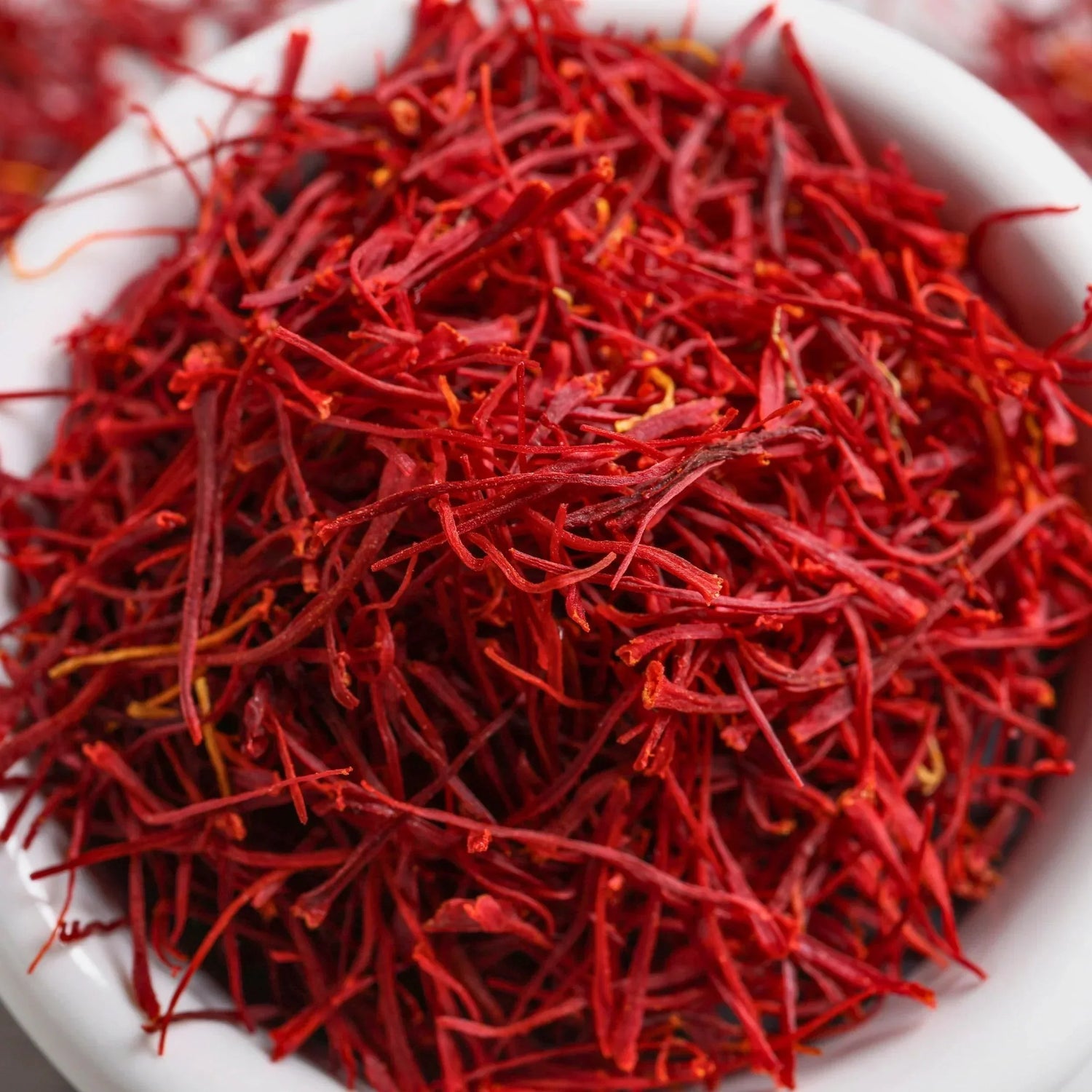
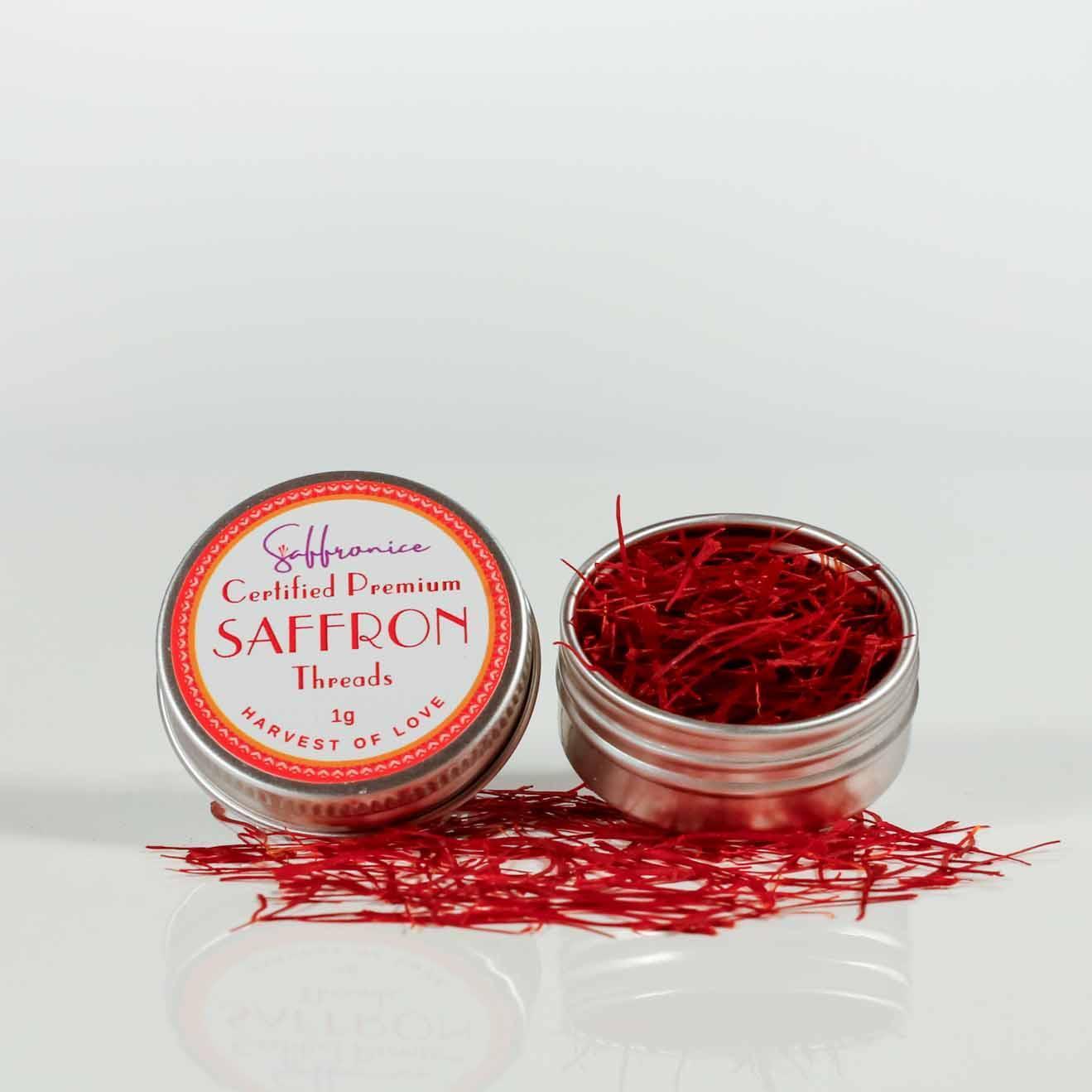
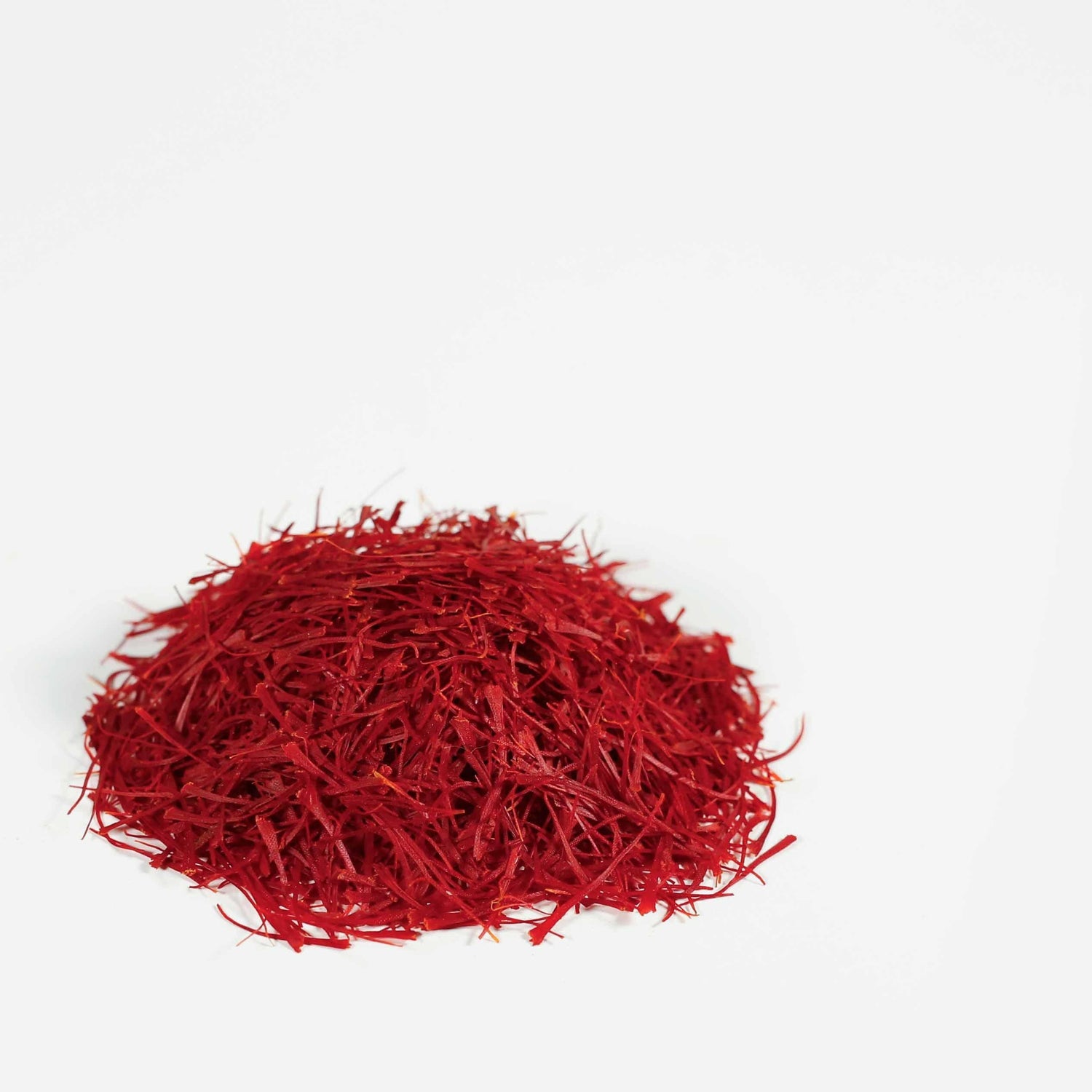
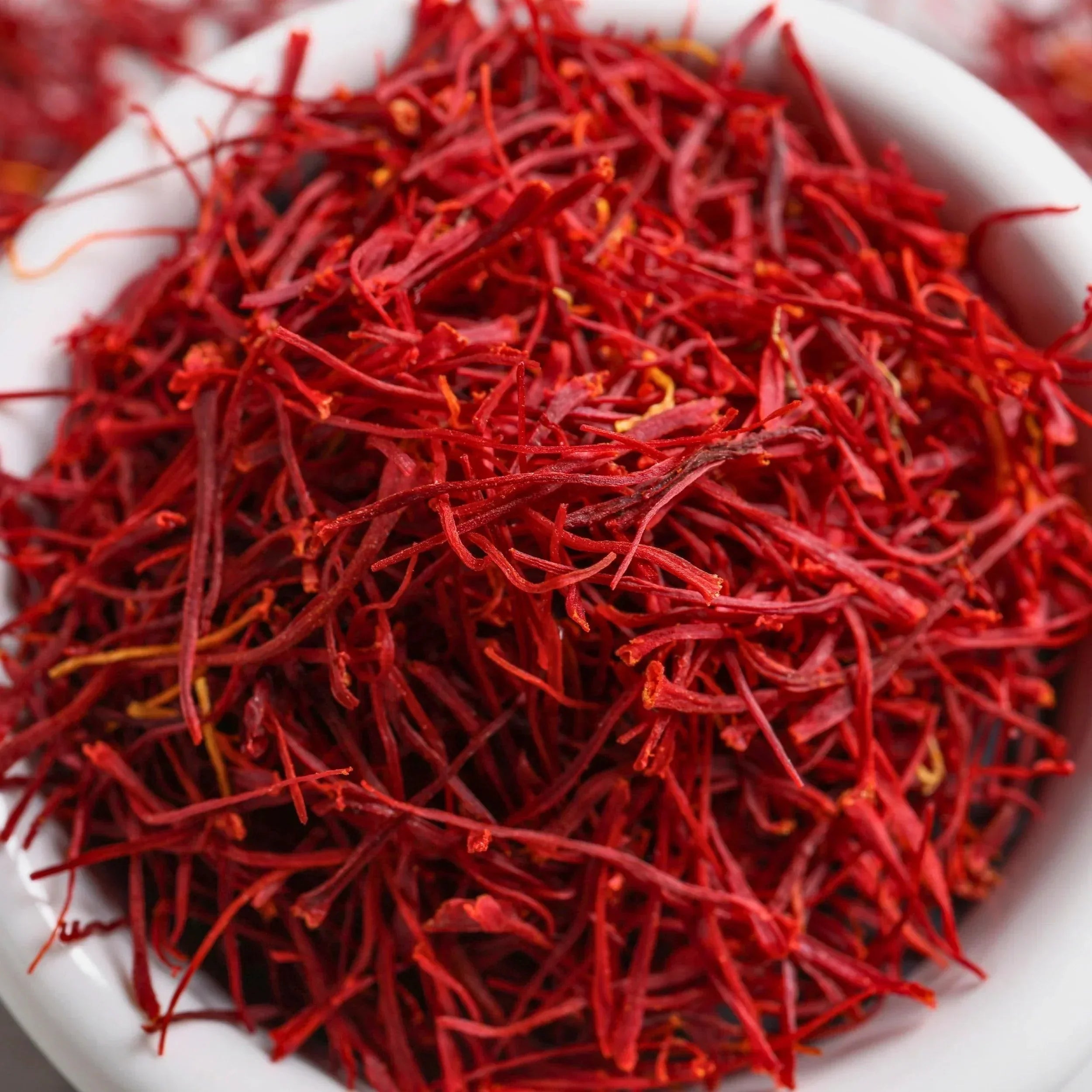
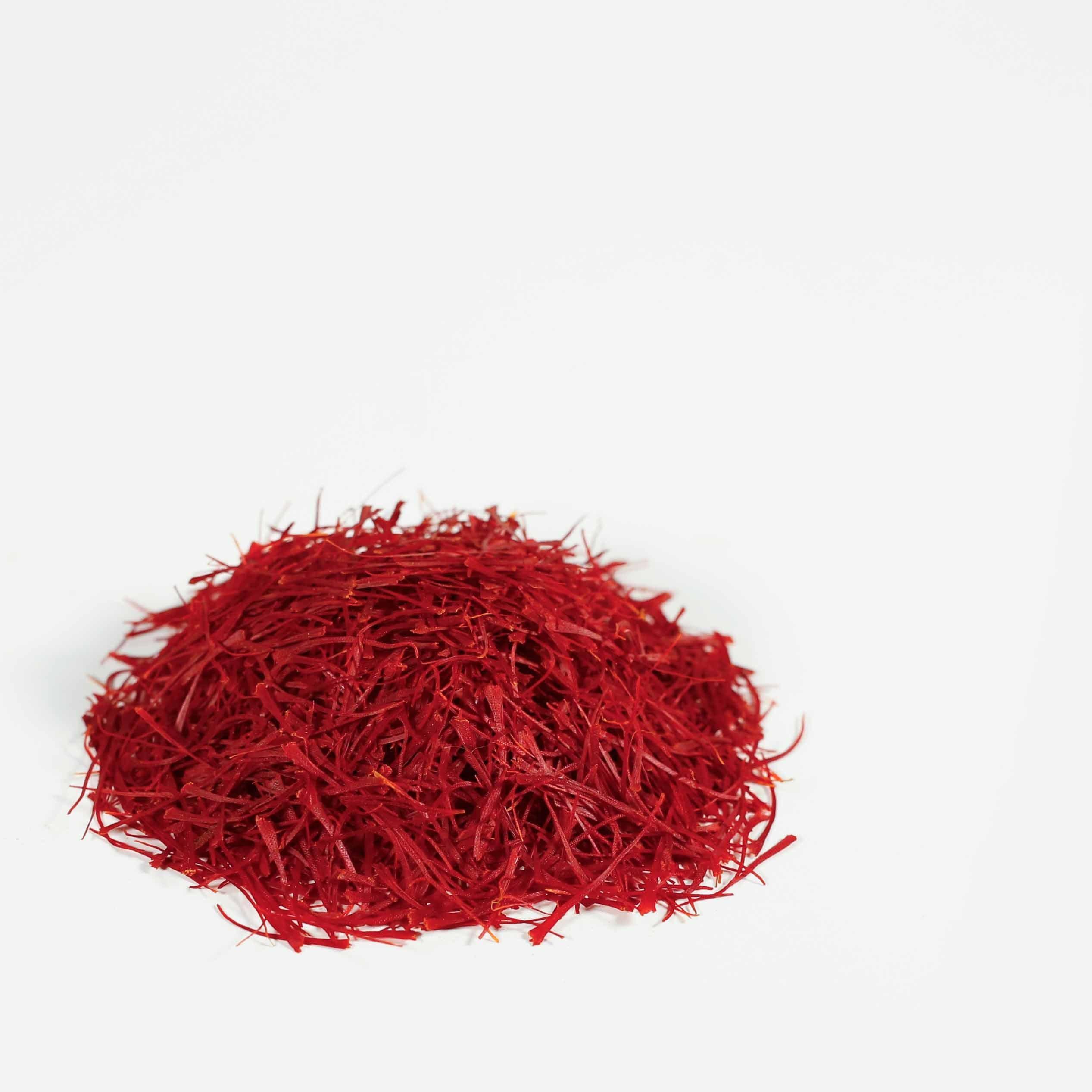
The spice comes from the red stigmas inside each Crocus sativus flower. Each flower produces only three stigmas, which must be separated from the flower and dried before they become the saffron threads used in cooking.
Because cultivated saffron is sterile, growers must also maintain the crop through its corms rather than simply producing new fields from seed.
The combination of specialised cultivation, small quantities of spice produced by each flower and labour-intensive harvesting helps explain saffron's longstanding value. These characteristics remain fundamental to what saffron is and how it is produced today.
 From Ancient Crocuses to Modern Saffron
Perhaps the most remarkable part of saffron's history is its continuity.
The cultivated saffron crocus is sterile and propagated vegetatively. For generation after generation, farmers have therefore had to keep the plant going by dividing and replanting its corms.
Modern saffron is part of that exceptionally long agricultural story.
At the same time, science continues to refine our understanding of it. Genetic research has strengthened the case for an ancient Greek origin, while historical evidence shows how saffron subsequently became deeply established in Persia and many other cultures.
Saffron's history becomes even more interesting when the evidence is separated from the legends that have accumulated around such an old and valuable spice. Modern genetics strengthens the case for an ancient Greek origin, while historical evidence shows how deeply saffron later became established in Persia and other cultures. Together, its ancient origins, continued human cultivation and movement between cultures make saffron's story particularly distinctive.
Key Takeaway
Saffron's story stretches back more than 3,500 years. Modern genetics points towards the saffron crocus emerging from wild crocuses in ancient Greece, while Persia became one of the spice's most important centres of cultivation, cuisine and cultural tradition.
References
Kazemi-Shahandashti, S-S., Mann, L., El-nagish, A., et al. (2022). Ancient Artworks and Crocus Genetics Both Support Saffron's Origin in Early Greece. Frontiers in Plant Science, 13, 834416.
View study / DOI
Nemati, Z., Harpke, D., Gemicioglu, A., Kerndorff, H. & Blattner, F.R. (2019). Saffron (Crocus sativus) is an autotriploid that evolved in Attica (Greece) from wild Crocus cartwrightianus. Molecular Phylogenetics and Evolution, 136, 14–20.
View study / DOI